Wednesday, 19 February 2020

Letter from London


Cyrano de Bergerac, adapted by Martin Crimp, directed by Jamie Lloyd, with James McAvoy, Playhouse Theatre


My Brilliant Friend, adapted by April De Angelis, directed by Mellie Still, National Theatre 


In two London theatres (one commercial, the other state-subsidised) last month I saw a new translation-adaptation of a classic 19thcentury French verse drama about a 17thcentury poet by a contemporary British playwright; and an epic two-part adaptation of a contemporary Italian novel-quartet (which has also been translated into English). Each reveals some of the characteristic advantages and pitfalls of adaption as a theatrical form – one that for various reasons (both artistic and commercial) is currently sweeping main stages around the world. Despite their historical and cultural differences, both productions also surprisingly complement each other as excavations of masculinity and femininity respectively, regardless of era or nationality.

*

Everyone can identify with the brilliant but disfigured main character in Edmond Rostand’s Cyrano de Bergerac, because the play makes a commonplace experience (to love and to suffer in hopeless silence) feel special. I first read it as a self-absorbed and romantically challenged teenager; many initially encounter it on film, perhaps in Jean-Pierre Rappeneau’s lavish French swashbuckler with Gerard Depardieu, or Fred Schepisi’s 1980s Hollywood rom-com Roxanne with Steve Martin and Daryl Hannah. I’ve also seen it on stage at least three times, including an ambitious student production (whose Roxane I duly fell in love with) and an elegiac staging by Terry Hands (autumn leaves floated down throughout Act Five) with Derek Jacobi for the RSC in 1983, in an elegant translation by Anthony Burgess. 

Frankly however it’s a play I ultimately prefer reading or daydreaming about rather than actually watching. Perhaps this is due (as with Peer Gynt) to its inherently preposterous and even arguably unstageable plot, which includes duels in crowded theatres, large-scale battles and a nocturnal garden-balcony love-scene derived from Shakespeare and Mozart, but lacking either precursor’s sublime lyrical or musical artifice. Then there’s the challenge of representing Cyrano himself in the flesh: not only his famous nose, which has to be both large and convincing enough to render his predicament plausible, but also his unparalleled prowess as a swordsman and spontaneous wordsmith. In this regard the play suffers from the inevitable weakness that typically afflicts most dramatic representations of genius, especially when the latter has to be demonstrated onstage. In short, as the lead character in Educating Rita bluntly observes in reference to Peer Gynt, the best solution is probably to do it on the radio.

In fact Jamie Lloyd’s minimalist production of Martin Crimp’s ‘free adaptation’ of Cyrano (which is currently playing on the West End at the Playhouse Theatre) does something more or less along those lines. In doing so however – and despite some outstanding performances – for me it ultimately falls short in realising the potential of Crimp’s brilliant translation.

As with his earlier version of Molière’s The Misanthrope, the playwright renders Rostand’s neo-classical Alexandrines as a form of irregular rhymed verse that resembles spoken-word street poetry or rap. Lloyd’s production underlines this by having the actors use detachable microphones mounted on stands to deliver almost all their lines (with occasional live beat-box accompaniment from a fellow cast-member). This gave me the slightly jaded feeling that I was watching the fashionable West End equivalent of the latest production by the Berlin Schaubühne – an impression reinforced by set and costume designer Soutra Gilmour, who places the action (such as there is) on a bare stage inside what looks like a plywood box furnished only with a few chairs, and dresses the mostly young, culturally diverse and talented cast in modern-day street clothes. 

Critically (if not fatally), there’s a notable absence of swords or contemporary forms of weaponry. The duel in Act One is literally fought with words alone – although the ‘palpable hit’ with which Cyrano skewers his rival Valvert at the end their improvised face-off is implicitly visceral as well as verbal. Nor are there any visible cakes (or any other forms of merchandise) in ‘Madame’ Ragueneau’s barren café-bar-bookshop-patisserie where Cyrano has his rendezvous with Roxane in Act Two while its owner (played by a droll Michele Austin) runs her cookery and creative-writing class. As for the love-scene in Act Three where a concealed Cyrano feeds Christian his lines to Roxane and then impersonates him in the darkness, this takes place on a fully illuminated stage with neither garden or balcony in sight. The Siege of Arras in Act Four is likewise rendered abstractly through dialogue alone; even Christian’s death is represented by having him simply sit on the edge of the stage, where he remains like a ghost throughout the final Act.

To be sure, Rostand was a poet (like Cyrano himself) as well as a dramatist; and the play certainly celebrates language more than fighting or arguably even love. Nevertheless I found Lloyd’s overall strategy of favouring verbal over physical action curiously cerebral and even bloodless – rather like watching a moved reading or semi-staged recitation rather than a fully fledged production. Interestingly Crimp’s adaptation (a copy of which I bought at the theatre) doesn’t indicate the same level of ‘conceptual’ staging; and there’s no mention of microphones or beat-boxing. Indeed the stage directions in the text specify that Cyrano ‘wounds’ Valvert (‘who staggers back, bleeding’); and the visceral impact of the battle in Act Four is emphasized by stage directions that refer to ‘gunshots’, ‘mortar fire’ and ‘explosions’ (none of which were audible in the production). In fact Crimp’s text is arguably at its most distinctive in this use of historical mash-up, in which jokes about 21stcentury identity politics jostle with arcane references to the eclipse of poetry by prose in the later 17thcentury, the niceties of swordplay give way to the horrors of industrialized warfare, and the Siege of Arras in the Thirty Years War (which provides the original context for the play) implicitly becomes the Battle of Arras in the First World War nearly four centuries later. I found myself wanting to see this composite, messy world concretely realised onstage, even in a theatrically stylised or artificial form – fake blood, swords, guns, explosions, noses and all. In short: for me Lloyd’s production lacked the corporeal (as well as linguistic) outrageousness that is essential to the theatricality of Rostand’s play – and is at least latent in Crimp’s adaptation. 

As for the lead performances: Scottish actor James McAvoy (State of Play, The Last King of Scotland, X-Men) gives Cyrano an undeniable injection of star power, as well as possessing the requisite stage charisma and bravura acting chops, especially in his crisp delivery of Crimp’s sparkling text. In this he’s well-matched by Anita-Joy Uwaje’s dazzling Roxane (as intellectually scathing as she is beautiful, making the depth of Cyrano’s devotion to her all the more plausible). The play’s central love triangle is completed by Eben Figueiredo’s gentle, sensitive Christian (who is likewise no fool, but simply out of his depth as a recent arrival in Paris, and tongue-tied when it comes to the language of love). 
In keeping with the production’s aesthetic, however, there’s no big nose (fake or real) to be seen. Perhaps the point is simply that beauty is in the eye of the beholder (including the ‘I’ of one’s own self-consciousness); but the lack of a visual ‘objective correlative' reduces the pathos of Cyrano’s situation, as well as the dramatic stakes whenever his enlarged appendage is mentioned – not to mention its unavoidably comic and even potentially phallic associations. Without it, McAvoy’s Cyrano is just as good-looking as Figueiredo’s Christian – and emphatically more macho. In this regard, one of production’s funniest (and most revealing) moments occurs in Act Two, when Cyrano’s army comrades tumble onstage into Ragueneau’s shop, chant their admiration for their leader (‘Who’s the man we always back?’ / ‘Cyrano de Bergerac!’) and proceed to strip and cavort around him like football team-mates in a change-room – a display of hyper-masculinity which Cyrano’s effete arch-enemy De Guiche (a caustic Tom Edden) describes with comic distaste as too much ‘vigorous male nudity before breakfast’. It’s almost as if the properly phallic quality of being excessive or de tropthat usually attaches to Cyrano’s nose is here displaced onto what it means – symbolically and literally – to ‘be a man’. The result however is to make his sexual introversion with Roxane seem less due to any actual physical ugliness than to some kind of neurosis or even phobia about sex or women – an impression reinforced in Act Five by Roxane’s understandable rage on discovering how she has been manipulated by both men when Cyrano reveals the truth about his authorship of Christian’s letters and secret lifelong love for her. 
Indeed Crimp departs from Rostand’s text most substantially in this final Act by making Roxane an alcoholic who haunts Ragueneau’s café-bar and has become De Guiche’s sexual property after losing both the love of her life and her former independence of spirit (rather than having withdrawn to a convent as in the original). Even more controversially, Crimp changes Cyrano’s famous last words: instead of invoking his own ‘panache’ (the French term refers equally to his flamboyant style and to the tuft of feathers on his cap), he dies in mid-sentence – ‘Have you not heard? / The hero always has to have the final…have the final…have the…’ (Lights dim) – echoing the dying words of that other great archetypal stage neurotic, Hamlet: ‘The rest is silence’.
As this meta-textual ending suggests, Crimp is a highly ironic and formally self- conscious playwright. As such he is decidedly out of step with the literalism, naturalism and political correctness that afflicts so much British and English-language theatre, at least on the main stages (including in the US and Australia). In this regard, as with the character of Alceste in Crimp’s earlier adaptation of The Misanthrope, his Cyrano could almost be construed as a self-portrait – and certainly an obstinate contrarian, defiantly at odds with his era, both as a writer and a man. Indeed McAvoy is at his most anguished when Cyrano is railing against the political, social, cultural and commercial forces that would limit his freedom as an artist, perversely insisting that he ‘needs’ the fuel of ‘their hate’ in order to ‘create’. Significantly however this outburst occurs in Act Two just after Roxane has unwittingly rejected him by innocently revealing that she loves Christian instead of him. Consequently there’s a sense that his need for rejection is as much psychological as it is artistic. Perhaps – again like Alceste in The Misanthrope – there’s even a touch of misogyny as well as misanthropy here. 
In fact Crimp’s ‘free adaptations’ are arguably at their most revealing as double-edged critiques of political/artistic correctness and contemporary masculinity. This might explain the otherwise anomalous moment in Act Four (most certainly not to be found in Rostand) when Christian suddenly asks Cyrano seemingly out-of-the-blue: ‘Is there a version / Of life where two men can live as one person?’ – and then unexpectedly kisses him, before hastily backing away and exiting to die in battle. Reflecting on this moment afterwards, it didn’t strike me so much as one of revelation about either man’s sexuality, as one of fleeting realisation about the constraints and distortions of gender-identity. It’s almost as if they were both half-men, like the mythical split-beings of desire evoked by Aristophanes in Plato’s Symposium, each seeking a missing part of themselves in the form of an idealised love which they share for the same woman. Perhaps this condition of ‘half-manhood’ is one of the most valuable insights Crimp’s version of Cyrano has to offer us as his (I mean both Crimp’s and in a sense Cyrano’s) contemporaries. 

*

If Crimp’s Cyrano can be read as a playful deconstruction of masculinity in its baroque, romantic and contemporary guises, then April De Angelis’s epic two-part five-hour adaptation of Elena Ferrante’s My Brilliant Friend (directed by Mellie Still and currently playing on the vast open stage of the Olivier Theatre at the National) is a comprehensive and penetrating exposé of the traps and contradictions that beset women, femininity and feminism in post-war Naples that speaks directly and urgently to contemporary women and men everywhere today. 

Di Angelis is a British playwright of part-Sicilian heritage who began her career as an actor; several of her plays are based on historical research and feature female protagonists. My Brilliant Friend was originally commissioned by the Rose Theatre in Kingston-Upon-Thames in 2016, and premiered there the following year with a cast of ten actors (expanded at the National to twenty-four) playing a total of forty characters from ten different families who mostly live in a working-class suburb of Naples (later scenes take place elsewhere in Italy as the story unfolds). The multiracial British cast use their own accents, and play multiple roles with the aid of simple costume changes, wigs, animated or exaggerated physicality and the especially effective use of puppetry (designed and directed by Toby Olié, who also worked on the National’s production of War Horse) to represent the two main characters’ childhood dolls – and later their actual children – as well as in key moments of physical violence. Set and costumes are designed by Soutra Gilmour (who also designed Cyrano) and feature multileveled mobile towers of scaffolding and wood equipped with stairways and platforms that the cast wheel around, reconfigure, race up and down or perch on to observe or act out scenes. The dynamic staging and sense of ensemble are appropriate to the epic story of a lifelong relationship between two women that is also the portrait of a community (arguably the third main character is the unnamed neighbourhood of Naples in which most of the action takes place) – and beyond that of an entire society convulsed by change in the post-war era of reconstruction that extends from the late 1940s to the present.  

Pseudonymous Italian author Elena Ferrante’s ‘Neapolitan Novels’ (My Brilliant Friend is the title of the first instalment, followed by The Story of a New Name, Those Who Leave and Those Who Stay and The Story of the Lost Child) have attracted a global following since they were first published in Italy between 2011 and 2014 (and subsequently translated into English by Ana Goldstein within a year of each novel’s Italian release, as well as into many other languages since). The powerful grip they exert on their readers (myself included) is primarily due to their visceral evocation of female experience under the combined onslaught of capitalism and patriarchy, and in particular the intensity with which they convey what De Angelis has referred to (in an interview with The New Yorker) as ‘women’s anger made real’. 

Undoubtedly their fascination is also attributable to their author’s scrupulous effacement of her real-life identity. Ferrante insists in written (and carefully guarded) interviews that this is a deliberate artistic and critical strategy (and perhaps even an existential choice) designed to place herself (and her role as an author) outside the circuit of publicity and to let her works ‘speak for themselves’. Intentionally or not, however, it also promotes an aura of mystery, as well as the paradoxical illusion of autobiography (an impression which is explicitly and painstakingly dispelled by Ferrante herself). This ‘reality-effect’ is heightened by the fact that the novels assume the form of a first-person memoir, whose narrator shares the author’s (pseudonymous) first name Elena (though she is mostly called ‘Lenù’ by the other characters) – and who herself becomes a successful writer, in the course of what is effectively a Bildungsroman or roman-fleuve (as Ferrante acknowledges, the novels were conceived and written as a single work).

Unlike its generic precursors however (from Goethe’s archetypal ‘novel of development’ Wilhelm Meister to later novel-sequences by Romain Rolland or Proust), the ‘Neapolitan Quartet’ is not primarily a story of (typically male) artistic formation, but rather one of tormented friendship between two women. Lenù and her counterpart Lila grow up together in a poverty-stricken outer suburb of Naples, but their educational, marital and professional paths increasingly diverge, while the emotional bond between them becomes correspondingly more and more fraught. In part this is due to their respective parents: Lila’s traditionally sexist working-class father won’t allow his preternaturally gifted daughter to continue her education beyond primary school (and even throws her out of a window when she secretly takes the middle-school entrance exam); whereas the similarly driven but less self-confident Lenù goes on to high school and university despite the opposition of her embittered and jealous mother. However their divergence also reflects a difference in temperament and perhaps even a kind of primordial splitting or division of personality-traits between them, which results in a (conscious or unconscious) assignment of roles in each other’s lives, in the world, and in the unfolding drama that awaits them. As such they are more like counterparts or soul-sisters than friends, with all the frustrations of love, hate, rivalry and obsession that such a complementarity entails. In essence, Lila is the rebel, and Lenù the conformist – although neither role fits comfortably, and both women suffer equally though in different ways from the strictures of a society that is deeply divided by class, gender and sexuality (the one explicitly gay character in the story – who also transgresses social norms in terms of their gender-identity – is eventually murdered by their gangster-lover). Underlying all the conflicts that drive the story is a bedrock of violence – its permanent threat, its regular enforcement, its irregular outbursts – in a culture that has been variously traumatized by Fascism, organised crime, religion, corruption, impoverishment, and deeply rooted misogyny and homophobia. 

The challenge to dramatizing the novels is that they are entirely written from Lenù’s point of view, and events are largely refracted through her consciousness. Ferrante’s deceptively lucid but at times febrile prose primarily communicates the heaving crosscurrents of her protagonist’s thoughts, feelings, emotions and sensations, most of which (as befits her character, in contrast with Lila, and apart from certain key turns in the plot) remain internalized and even unexpressed. Theatre on the other hand demands externalisation in the form of action and dialogue. In fact there’s very little of the latter in the novels, and a preponderance of exposition, description and reflection, none of which inherently lend themselves to the stage. In other words, a radical act of adaptation is required; and neither play nor production is entirely successful in achieving this.

The show works best when embracing its inherently rough-and-ready aesthetic as a form of physical and image-based storytelling derived from Brechtian epic theatre and more recent British and European companies like Shared Experience, Theatre de Complicité, Theatre de Soleil or Peter Brook’s productions at the Theatre des Bouffes du Nord. The most effective moments involve a heightened theatricality and materiality, such as the use of puppetry or stylized physicality (imaginatively choreographed by movement director Sarah Dowling) – notably to represent Lila’s borderline psychotic episodes of distorted perception or ‘dissolving boundaries’. My favourite moment in the whole show was the orgy of dismemberment (involving fake limbs and eyes being ripped from their sockets) that is wreaked in fantasy by the two protagonists on their male betrayers and tormentors during Lila’s wedding at the end of Part One, which went way beyond the literal staging of the novel that dogged so much of the dramaturgy elsewhere, while effectively communicating the Bacchic frenzy of Ferrante’s prose at its most delirious.

Special mention must also be made of the two riveting central performances: Niamh Cusack as the more cautious, controlled and conciliatory (but nonetheless deeply divided) Lenù; and Catherine McCormack as the more direct, defiant, and wilfully destructive (but perhaps ultimately more vulnerable) Lila. Watching them seal their Faustian pact of loyalty at the start of the show by swapping dolls was a thrilling epiphany (for this reader of the novels at least); indeed I found myself wanting the entire adaptation to be structured around them as a minimalist two-hander, with the two protagonists playing all the other roles, regardless of age or gender. As it was, I found most of the rest of the unnecessarily large cast to be grievously underused, and in most cases under-par in terms of their performances, frequently reducing their characters to two-dimensional stereotypes (in part this was due to the writing and direction, both of which tended to reduce the story to a whistle-stop tour of the main plot-points; while much of the dialogue was clumsily expositional and devoid of dramatic thrust or genuine characterisation). Two signal exceptions to this were an amusing and touching performance from Justin Avoth as Pietro, Lenù’s well-meaning but irremediably clumsy, unwittingly oppressive and ultimately pathetic academic husband, and a mesmerizing turn from Colin Ryan as Alfonso Carracci, Lila’s geeky schoolboy admirer who later becomes her cross-dressing alter-ego, before finally falling victim to the perverse attentions of her nemesis, the sadistic Michele Solara (an insufficiently menacing Adam Burton).

In sum: like watching the theatrical equivalent of an HBO miniseries, My Brilliant Friend offers a compelling visual and dramatic world, at least two great performances and enough thrilling moments to deliver a cumulatively satisfying and compulsive five hours in the theatre, either seen (as in my case) over two days, or (as is possible on weekends) at a single sitting. Whether it ultimately transcends its status as a staging of the books to become an autonomous work of theatre than will inspire future productions remains to be seen.

*

My Brilliant Friend is currently running at The National Theatre until February 22.

Cyrano De Bergerac is at the Playhouse Theatre until February 29.


Thursday, 30 January 2020

Por Piedad Teatro: A Special Day

A Conversation with Ana Graham and Antonio Vega


A minimalist stage adaptation for two actors by a Mexican theatre company of a classic Italian film about fascism is a somewhat unusual offering even under the broad canopy of Perth Fringe. Even more intriguing is the fact that it’s being staged in the former Home Economics classroom at Perth Girls School (which is this year’s designated Fringe Hub) rather than as a part of a curated season at a more conventional venue, before heading on to the Black Box Theatre at the Adelaide Fringe later in February.

A Special Day (Una Giornata Particolare) was originally a 1977 film by Ettore Scola starring Sophia Loren and Marcello Mastroianni. Set on the day of Hitler’s official state visit to Rome in 1938, it deals with an encounter between a married woman (Loren) and her gay neighbour (Mastroianni) who live in the same apartment complex. Antonietta is a submissive housewife whose Fascist husband is attending the celebrations with their children while she stays home to do domestic chores; Gabrielle is a radio announcer who has lost his job (and is about to be arrested and sent to a concentration camp) because of his sexuality. 

The film is exceptional for many reasons, not least because of the casting-against-type of its two leads – icons of heterosexual glamour who had appeared together frequently in romantic comedies and passionate melodramas like Yesterday, Today and Tomorrow or Marriage Italian Style. In A Special Day they play unusually downtrodden characters, though Loren's beauty, Mastroianni's charm and their evident chemistry inevitably shine through, most memorably in a marvellous scene where Gabrielle teaches Antoinetta the rumba. As a film that consciously harks back to the Italian postwar tradition of social realism (the first five minutes or so are actually taken from archival propaganda footage of Hitler’s arrival and meeting with Mussolini in Rome), it was also an unusual venture for Scola, who despite being a member of the Communist Party was hitherto most famous as a director of satirical comedies.

The play (also called A Special Day) remains true to the film’s spirit of iconoclasm, and has picked up a swag of awards at previous Adelaide and Prague Fringe Festivals, as well as performing elsewhere around the world, since it was first developed and presented in New York in 2013 in partnership with The Play Company (now renamed PlayCo). Earlier this month I had a chat with the show’s co-creators and co-performers Ana Graham and Antonio Vega (who are also a couple) in an apartment building (which is somewhat more up-market than the one in the film) in downtown Manhattan, where their Mexico City-based company Por Piedad Teatro now has a second home. 

Graham, who is also Artistic Producer, explains that ‘Por Piedad’ means something like ‘for pity’s sake’. She established the company in 1999 to put on local Mexican productions of contemporary international plays, staged with high production values but operating (as Graham puts it) ‘in the tropical way’ – i.e. without any substantial state funding or resources. Vega, who joined the company in 2004 and became Artistic Director in 2012, adds that Graham’s early productions were nevertheless relatively ambitious and large-scale, involving established Mexican actors, directors and designers. In contrast A Special Day sounds about as minimalist as you can get, as it involves two actors (Graham and Vega, who also co-direct) using basic costumes, a few props and (crucially) chalk, which they use to draw windows, doors and other features and objects onto three portable black walls, which constitute the eminently tour-friendly set design. 

I ask about the influence of Grotowski’s ‘poor theatre’, which they acknowledge along with the work of Eugenio Barba and Peter Brook’s idea of ‘the empty space’. Initially however the impetus for the show was pragmatic, even opportunistic. Essentially they wanted to establish the company on the New York theatre scene, but felt hamstrung by their lack of contacts, ‘as well as by our Mexican accents’. Consequently they were looking to do something ‘different’ from regular Broadway (or even off-Broadway) theatre-fare that would also openly acknowledge the cultural clash between their heritage and the material. (The show begins with them introducing themselves as Mexican actors and explaining that they not in fact Italian, although apparently some New York audience members congratulated them afterwards for sounding so ‘authentic’). 

Fortuitously two colleagues in Mexico City had already come up with the idea of a semi-staged adaptation of A Special Day (based on watching the film but without referring to the actual screenplay) as kind of ‘hypothetical’ production (somewhat along the lines of Orson Wells’s Moby Dick Rehearsed) in which the closing scenes of the film were not even enacted but merely described. Vega says he never even saw this version, but was inspired when Graham told him about it. With their colleagues’ permission they borrowed the concept and fleshed it out, adding more detailed period costumes and props, but still using chalk to delineate the set, in order to encourage the audience to (in Graham’s words) ‘suspend their disbelief’.  They also duly contacted the Scola estate in order to secure the rights, but ‘the Italians’ (as Graham wryly calls them) insisted that they adhere to the original script, including all the characters and dialogue, which in turn added to the element of absurdity that is part of the show’s playful aesthetic.

Elaborating on the rationale behind the production, Vega explains that (as always in theatre-making) there is a ‘how’ as well as a ‘what’. In this case, the ‘how’ (i.e. the theatrical form of the show) came first, and determined the ‘what’ (in the sense of the show’s content). In fact they acknowledge that when they first chose this particular film as their source material eight years ago, the current global rise of the populist far right had scarcely begun, and the likes of Bolsonaro and even Trump were not yet in power, though oppositional figures like Le Pen were already on the scene. Now, as Graham sadly observes, the apparently secure achievements of post-war democracy and ‘tolerance’ (which is the word she uses to describe what, for her, the film is fundamentally ‘about’) are once more in peril, and even ideas like feminism or the right to be gay have to be re-articulated and fought for all over again. Vega adds that for him the film demonstrates how fascism is not just about politics, but is a ‘mentality’ (the audience are ironically greeted as ‘good fascists’ at the beginning of the play). Graham points out that Loren’s character in particular is an unquestioning and enthusiastic admirer of Mussolini, and tellingly compares her with ‘women who voted for Trump’. She argues (somewhat more debatably perhaps) that Antonietta’s compliance with sexism, racism and homophobia are primarily due to ‘ignorance’, which gradually evaporates when she gets to know Gabrielle more intimately (if only things were that simple, I can’t help reflecting, reluctantly acknowledging to myself the limits of the film’s humanism).

They’ve been doing the show for eight years now, and remark that its creative development, rehearsal process, production style and evident success with audiences have all had a significant impact on their subsequent work as a company and as individual artists (Vega also works as a freelance actor and director outside the company). In particular, they acknowledge how co-directing and performing in the show was initially a challenge for them (especially as a couple), and even led to conflict, until they realised that they both needed to stop trying to ‘impose their will by force’ – which as Vega observes is one definition of ‘what fascism really means’. He says he now takes a more collaborative approach on other productions, for example when recently directing a show with a larger cast in which he also performed. 

For all these reasons, A Special Day sounds like a very special play, and one not to be overlooked in the hurly-burly of Fringe. At the end of Scola's film, when all seems lost, we remember that something has perhaps has been conceived, for Antonietta at least, on what has been for her – secretly, but no less crucially –  ‘a special day’.  I'm looking forward to seeing that spark of incendiary defiance and even (dare one say) hope rekindled in this production. 

*

A Special Day runs from February 3 to 16 at the Fringe World Hub, Home Economics, Perth Girls School (bookings at the Fringe World website); and then from February 25 to March 15 at The Black Box Theatre in Adelaide (bookings on the Adelaide Fringe website).

Production image by Carol Rosegg.


Monday, 16 December 2019

Postcard #2 from NYC 


The Inheritance, Matthew Lopez/Stephen Daldry, Ethel Barrymore Theatre


The Inheritance is a two-part, seven-hour adaptation of E. M. Forster’s novel Howard’s End, set in contemporary New York. It deals with three generations of gay men in the wake of the AIDS epidemic of the 80s and 90s – before the advent of anti-retroviral and pre-exposure medication reduced the impact of the disease, at least in the developed world – in the context of the current crisis of neo-liberalism and the rise of Donald Trump. 

The play was originally produced at The Young Vic in London in 2018 before transferring to the West End and now Broadway. New York playwright Matthew Lopez developed the play in collaboration with British director Stephen Daldry (An Inspector Calls, Billy Elliot, The Hours, The Crown) and an American-British cast of thirteen, the five leading actors remaining consistent from London to New York, along with the stunningly simple set and costume design by Bob Crowley. The set essentially consists of a white box with a central dais that can be raised or lowered, on which the ensemble cast lounge around languidly at the start of the show like students waiting for an acting or writing class to begin; they then gather around the dais to sit and watch or comment on the action as it unfolds. There is virtually no furniture, the actors mostly wear simple clothes in subdued colours, and most have bare feet throughout the show.

The relationship between a theatrical adaptation and a novelistic original resembles the biological phenomenon of homology (as opposed to analogy), in which the body parts of two different species share a similar structure because of their origin rather than function (the classic example being the relationship between arms and wings). In this case plot, characters and themes (most obviously, the concept of inheritance itself, which is a key motif and plot-device in Howard’s End) are transposed (sometimes in a disguised, divided, doubled or ‘queered’ form) from one narrative setting and artistic medium to another. 

The process of adaptation itself is also thematized by the incorporation of Forster (animated with spritely energy by British actor Paul Hilton) as a kind of artistic and personal mentor-figure called ‘Morgan’ (as Forster was known by his intimate friends), who interacts with the rest of the cast, encourages them to tell their stories and assists with the unfolding of the play. The other characters also refer to Howard’s End and other novels – including Forster’s only overtly gay novel, Maurice, which was withheld from publication until after his death. 

In fact, even the off-stage collaboration between playwright, director and actors is replicated onstage by the homologous relationship between Forster and the ensemble, who at least initially appear to be more or less improvising the action and storytelling, if not the actual story itself, as they go along. This is especially marked in the use of collective and self-narration in the ‘omniscient’ third person for ironic effect to introduce characters and plot-points and to report on the characters’ thoughts and feelings. There are also some early ‘improvised’ sex-scenes using acting warm-up exercises, in a hilarious Brechtian ‘baring of the device’. All of this generates an exhilarating sense of performative lightness and freedom. The use of narration in particular recalls the authorial voice employed by Forster that continually interrupts and comments on the action in the novel.

In this regard one could also point beyond Forster and Howard’s End to Jane Austen, and in particular Sense and Sensibility – a similarly ironic novel about love, marriage, money, property, inheritance and social class. The precursor novel also features two sisters with contrasting personalities, one (in her own eyes at least) more ‘sensible’, the other more given to romantic or idealistic flights of fancy (the ‘sensible’ older sisters, Margaret Schlegel and Elinor Dashwood, are memorably played by the divine Emma Thompson in the film versions of both novels). 

Lopez makes his boldest move by recasting the Schlegel sisters of Howard’s End as a gay male couple: conscientious liberal activist lawyer Eric (a deeply felt and anchored central performance by London-based American actor Kyle Soller) and narcissistic aspiring playwright Toby (a witty, mercurial and ultimately anguished Andrew Burnap), who are happily but precariously ensconced in a coveted rent-controlled apartment on the Upper West Side that once belonged to Eric’s Jewish refugee grandmother (paralleling the Schlegel’s similarly provisional occupancy of their father’s flat in central London). Meanwhile Forster’s pragmatic and wealthy industrialist Henry Wilcox and his more ethereal and intuitive wife Ruth are transformed into a billionaire property developer teasingly also named Henry Wilcox (and played with ebullient bluster by John Benjamin Hickey) and his life-partner Walter (also played by the versatile Hilton with touching fragility) who share an apartment in the same building. They also own a rural retreat in upstate New York, echoing the country house in Hertfordshire (itself a fictionalised version of Forster’s own childhood home at Rooks Nest) that gives its title to Howard’s End. (The 'reveal' of this house at the end of Part One, and again in the final Act of Part Two, is the only significant 'prop' in the show.)

What follows is an ingenuous set of variations on the novel which are no less brilliant, moving and salutary for being recognizable, at least to those who’ve read it (or seen the film); for those who haven’t there are complementary pleasures in terms of the plot-twists and emotional vicissitudes. Lopez and Daldry add a few twists of their own, most memorably at the end of Part One in a devastating coup de théâtre I won’t reveal, except to say that it expands the frame of the play and production (as well as the novel) in a way that had me sobbing along with most of the audience, and took me much of the next two hours’ break to recover from.

After this moment of transcendence, Part Two didn’t quite live up to the promise of Part One. Instead, the play seemed to digress from itself as well as its novel-source in form, content and spirit. The figure of Forster was literally banished from the stage, while the ensemble of other actors also became increasingly absent or marginal. Instead the story of Toby (now separated from Eric) took over, in an increasingly melodramatic spiral of self-destruction and protracted revelations about his past. The use of long backstory monologues, which had been effective earlier in the play, also struggled to hold my attention six hours later, especially when introducing new plot-points, characters and even actors, notwithstanding fine performances from Burnap as the increasingly off-the-rails Toby and Lois Smith as Margaret – the only female character or actor in the show, unfortunately tasked with a rather generic, sentimental and dramatically redundant story about a formerly homophobic mother who becomes a carer for gay men dying of AIDS. 

In short, I felt we’d shifted from the late-romantic irony of Forster to the melodrama of Tennessee Williams or Douglas Sirk, but without the former’s tortured brilliance of language, characterization and psychology, or the latter’s pointed use of Hollywood conventions for the purposes of social critique. Meanwhile the political diatribes and debates about Trump, the contradictions of neoliberalism and the mainstream assimilation of gay culture were enjoyable enough but sometimes felt more like watching a bourgeois domestic satire by Bernard Shaw or even (horribile dictu) middle-period David Williamson. The previously exquisite minimalism of Jon Clark's lighting and Paul Arditti and Christopher Reid's sound design also began to crank up and decorate or underscore scenes and speeches, and a similar element of theatricality crept into some of the lead performances.

As the result Toby’s story became pure soap opera, driven by the mechanics of plot rather than the dynamics of character or larger social forces. Here the most tenuous narrative thread for me was that involving the lookalike roles of parvenu actor Adam and desperate rent-boy Leo (respectively played with consummate charm and touching pathos by Samuel H. Levine) as the successive objects of Toby’s narcissistic obsession. The theme of ‘the double’ is of course another melodramatic convention straight out of the Gothic novel by way of Vertigo, but here it was introduced without any stylistic sense of psychological disintegration or nightmare. Indeed I couldn’t help feeling that Toby’s story might have been better served if Adam and Leo had been combined into a single character with a more complex and satisfying dramatic arc. Admittedly the corresponding figures in Howard’s End of the aspirational clerk Leonard Bast and his ‘fallen’ co-dependent partner Jackie are also the weakest link in the novel’s plot and its attempt at a comprehensive portrait of Edwardian class society. Indeed the clumsily contrived way Leonard is summarily dispatched in the novel mirrors Toby’s dramatically unconvincing end (no spoilers here, as his death is flagged throughout the play) when faced with the opportunity to finally confront his past. Personally I’d rather have seen him exercise his freedom of choice ‘to live’ (as the closing words of the play exhort us to do) rather than his fate being seemingly pre-determined by childhood trauma and parental role modelling.

In saying this, I’m not necessarily asking for a conventional happy ending. Certainly the novel closes with Margaret reconciled with her sister and husband, and living with them and Helen’s infant son at Howard’s End. Nevertheless the scene is hardly one of domestic bliss or achieved grace. Though Henry’s hypocrisy is forgiven, he is an emotionally broken man, and there’s a sense that their connection with the local countryside and community is similarly fragile. The nostalgic glow of an Edwardian sunset lingers over the novel’s closing pages, with the shadow of encroaching suburbanization – not to mention global slaughter on an industrial scale – looming on the horizon. In this context the novel’s famous injunction to ‘only connect’ feels almost plaintive. Connect with what, or whom, and for how long? The Inheritance ends with an even more tenuous ménage – Eric, his now-ex-husband Henry, and Toby’s (and Henry’s) former hired lover Leo – living on (and eventually dying of old age) in a kind of pastoral idyll at the house in upstate New York that Walter had turned into a hospice for men dying of AIDS. The medical and social catastrophe of the epidemic lies behind them, as well as the successive ravages of neo-conservatism and neo-liberalism – and it is implied that they will weather the storm of Trumpism as well. 

This is the point at which the play perhaps more than the novel seems to take refuge in sentimentality, and the privileged status of the main characters (with the exception of Leo and the ups and downs of Toby’s childhood) begins to limit their perspective as well as stretching our capacity to care. As my companion at the performance commented afterwards, why not turn their rural retreat into a halfway house for LGBTQ homeless youth, or others plagued by discrimination and disadvantage? It’s worth noting in this regard that in the US the cost of PrEP treatment for HIV infection is around $US 20,000 per year, which effectively restricts its use to those who can afford to pay for it, because of big pharma monopolies and political-administrative indifference to communities most at risk (not to mention the rest of the underdeveloped world).

In a similar vein I couldn’t help wondering why Lopez (who himself has Puerto Rican heritage) and Daldry envisaged and cast all its main characters as white, limiting cultural diversity to only a few other members of the ensemble in supporting roles. Forster (like Chekhov) was writing about the vanishing world he knew, socially and culturally, but this is hardly the case for the playwright and director of The Inheritance, or its audience. A more intersectional perspective would extend a chain of equivalence back to the story of Eric’s Jewish grandmother as well as forward to other forms of injustice, and allow for a more complex legacy of oppression as well as privilege. 

This notion of equivalence (rather than identity) is also another way of thinking about adaptation, because it recognises similarity while also acknowledging difference. In the case of The Inheritance the notion of an inherited past (together with its traumas and gaps, its acts of denial and gaping wounds) underlies the play’s title, and implicitly gives it a different purview from Howard’s End. In fact, even in the novel, the eponymous house was always more than a house: it was a symbol of connection, between kindred souls, and within the soul, between sense and sensibility – or as Forster rephrases this in his 'adaptation' of Austen, between 'prose' and 'passion'.  

What does it mean, Eric movingly asks at one point in the play, to be gay now, today? Who are we – whoever ‘we’ are – if we can't connect with our history, in the form of a shared experience, knowledge, culture or sense of community, transmitted from one generation to the next? In this regard the most potent gift of The Inheritance may be its evocation of spiritual and artistic mentorship, not only between generations, but also across the river of time and forgetfulness that separates the living and the dead. Perhaps here the phrase ‘only connect’ acquires its greatest resonance.

*

The Inheritance opened on Broadway at The Ethel Barrymore Theatre on 17 November, 2019.


Monday, 9 December 2019

Postcard from New York


Akhnaten, Philip Glass, Metropolitan Opera, New York 


Akhnaten is the third of Philip Glass’s early trilogy of portrait-operas, following Einstein on the Beach and Satyagraha (the Sanskrit word for Gandhi’s philosophy of non-violence). Where the previous two works focus on revolutionary figures and movements in twentieth-century science and politics, the third deals with an ancient and less well-known episode in the history of religion. 

Akhnaten (or Akhenaten as his name is usually spelled in English) was an Ancient Egyptian New Kingdom Pharaoh who abolished traditional Egyptian polytheism in favour of the exclusive worship of the sun-god Aten. He also challenged the authority of the priesthood and moved the centre of power and worship from Thebes to the newly built capital city of Akhetaten (now Amarna). 

The period of his reign was also marked by more fluid and naturalistic or distorted forms of artistic representation, especially regarding the Pharaoh and his family. In religious art conversely there was a move away from animal, human or hybrid images of the various deities towards the increasingly abstract symbol of the sun’s disk and rays; eventually even this image was forbidden, and the name of the Aten was spelled phonetically rather than using hieroglyphs.

Images of Akhenaten display bizarre and even androgynous features, which may or may not have been anatomically accurate. Possibly they were stylized or represented symbolic aspects of the god Aten, who was called the ‘mother and father’ of creation; in his famous ‘Great Hymn to the Aten’ (which strikingly resembles Psalm 104), Akhenaten refers to himself as ‘thine only son’. He appears to have shared royal status to an unusual degree with his famous queen Nefertiti, and there is speculation that he also shared power and had sex with his daughters as well as his sister (with whom he fathered his successor the briefly reigning child-king Tutankhamen) and even his mother Queen Tiye.

The Russian polymath and pseudo-scientist Velikovsky (with whom Glass originally intended to collaborate on the libretto) claimed that Akhenaten was the origin of the legend of Oedipus; and the late, great Dorothy Porter made him the queer, androgynous, incestuous and ultimately monomaniacal anti-hero of her eponymous verse novel Akhenaten. However a more significant influence on the composer was Freud, who argued in Moses and Monotheism that Moses was an Egyptian follower of Akhenaten fleeing his homeland after the latter’s death with a band of fellow renegades, who eventually turned on their leader and killed him before founding Judaic monotheism out of guilt (a theory that possibly says less about Akhenaten, Moses or monotheism than it does about Freud himself). 

For whatever reasons (most likely political and economic) the Atenist revolution in religion, art, politics and (possibly) morality was short-lived, at least in Ancient Egypt, though arguably it merely lay dormant until its next historical incarnation. Subsequent generations of Egyptian rulers erased all record of what was regarded as an aberration. The power of the traditional priesthood was restored, the names of Akhenaten and his immediate successors were removed from the official list of Pharaohs, the city of Akhetaten was abandoned, and the temples consecrated to Aten were destroyed.

Glass makes the story of Akhenaten a kind of Passion Play, as the title character is not so much the tragic author of his own downfall as the martyr-victim of external forces that destroy him: the priesthood, the military, and the threat of Hittite invasions. However he also represents a possible figure of hope or salvation in the future – or at least in the symbolic afterlife of religion and art. So at the end of the opera the Narrator/Scribe – a speaking role who in this production is also the ghost of Akhenaten’s father, Amenhotep III (a vocally and physically commanding performance by bass-baritone Zachary James) – becomes a present-day tour guide describing the ruins at Amarna (using words from a Fodor’s travel book); meanwhile the ghosts of Akhnaten (counter-tenor Anthony Roth Costanzo), Nefertiti (mezzo J’Nai Bridges) and the Queen Mother Tye (Icelandic soprano Dísella Lárunsdottir) appear and sing wordlessly as the music from the opening Prelude to Act 1 is reprised. One is reminded of the importance of the afterlife and the transmigration of souls in Ancient Egyptian religion; perhaps the sun-god Aten is to be reborn as Yahweh, his son-king Akhenaten as a Messianic saviour, and even the city of Akhetaten as the New Jerusalem – or in more secular terms, a horizon of freedom and peace on earth (though in historical fact the Atenist revolution seems to have degenerated like all such programs into intolerance and tyranny).

The score and orchestration as well as the libretto and dramaturgical structure of Akhenaten are in some respects more conventional than Einstein or Satyagraha. The orchestra more or less resembles that for a typical nineteenth century romantic opera, with the addition of tubular bells and the notable absence of violins, which gives the overall sound a darker and more melancholy colour (Glass allegedly did this because of the reduced size of the orchestra pit at the Stuttgart Opera due to renovations when the work was first performed there in 1984). The composer’s signature use of relentless ostinatos –repeatedly rising and falling arpeggios, scales and two-note oscillations – and almost imperceptible shifts in tempo, time-signature or even key-signature (most of the opera is in A minor) are made more palatable by the use of soaring melodies, especially in Act 2 for the tender love duet between Akhnaten and Nefertiti (which recalls the divinely erotic love poetry of the Hebrew Song of Solomon), and then later for Akhnaten’s ardent Hymn to the Sun. The last is a long solo aria which Glass specifies is to be sung in the language of the audience (most of the rest of the libretto is in Ancient Egyptian or Akkadian); it is then recapitulated by an offstage chorus, this time using the Hebrew words of Psalm 104.

The opera is thus something of a glorious mishmash (or perhaps more appropriately midrash, or Jewish scriptural commentary) in terms of musical, dramatic and theological material. British director and long-time Glass collaborator Phelim McDermott (who will be performing in his production of The Tao of Glass for Perth Festival in March 2020) previously directed Satyagraha for the English National Opera as a co-production with the Met and his theatre company Improbable in 2007–8; Akhnaten is a similar co-pro with LA Opera and Improbable which debuted at the ENO in 2016, and is the first production of the opera to be seen at the Met. 

McDermott’s staging adds another layer of dramaturgical ‘commentary’ to the score and libretto, which gives the whole work an added sense of coherence and cumulative impact. This involves the indeed improbable but nonetheless inspired use of juggling (suggested by early depictions of juggling in Ancient Egyptian tomb paintings) more or less continuously throughout the show, with twelve onstage jugglers (choreographed by Sean Gandini) in hooded and speckled Lycra bodysuits, sometimes augmented by members of the chorus and even the Narrator/Scribe, making increasingly complex patterns of movement with an escalating series of more and more numerous juggling balls in various shapes and sizes. The effect is to give a kind of visual counterpoint to the rising and falling, intricately woven and incrementally changing patterns of the score, as well as adding a heightened level of tension and focus to the music and its flawless realisation by the orchestra and singers. You really have to hear Glass performed live to appreciate the thrill of this as well as its hypnotic power – here allowed to unfold with unusual sensitivity and flexibility by the Met Opera Orchestra under the baton of Glass specialist Karen Kamensek. 

Stylized movement in extreme slow motion by the singers is also carefully choreographed, and gives the impression of hieratic figures in Ancient Egyptian art slowly coming to life and (especially in the case of Akhnaten and Nefertiti) becoming free-flowing bodies in three-dimensional space. In a New York Times interview McDermott says he used Michael Chekhov’s elemental ‘movement-qualities’ to achieve this; whatever the case, the result is an unusually liberated physicality on the part of the singers. 

Kevin Pollard’s hybrid costumes add another layer of visual complexity by referring both to Ancient Egypt and to the era of nineteenth-century European archaeology when the remains of Akhenaten and his city were uncovered. In particular the roles of Nefertiti’s father and imperial advisor Aye (bass Richard Bernstein), the High Priest of the former reigning god Amon (tenor Aaron Blake) and the military general and future Pharoah Horemhab (baritone Will Liverman) are all costumed in a way that suggests that the nature of power behind the scenes has changed little in the intervening centuries. Aye is dressed in a Victorian frock-coat and top hat (surmounted by a voodoo-like skull) like a sinister and manipulative business tycoon, and Horemhab wears a khaki jacket and culottes like an army officer poised to stage a military coup. 

In contrast, Akhnaten, Nefertiti, Tye and the Narrator/Scribe are dressed in a riot of what looks like gloriously coloured and textured bric-à-brac. Zachary James’s bald, towering Scribe resembles a Klimt painting in his long patched gold robe (later stripped back to expose his muscular arms). Akhnaten’s royal dress fans out like a Velasquez Infanta and is decorated with sewn-on doll’s faces. Later he and Nefertiti appear in matching diaphanous scarlet nightgowns, beneath which the barely visible outlines of female breasts and pubic triangles give them the appearance of twin hermaphrodites. 

The impact of the costumes is heightened by the saturated colours of Bruno Poet’s lighting and Tom Pye’s multileveled scaffolding set, crowned by a succession of huge descending gold, red and silver disc-shaped solar icons. In combination with the postmodern minimalism of Glass’s repetitive score, the overall effect is of a vaguely steam-punk sci-fi visual and aural world that is less archaic than futuristic in its vision of Ancient Egypt as a floating realm of unchanging dreams.

All this is anchored by Costanzo’s extraordinary central performance. He first appears for his coronation naked and totally shaved like a newborn baby, and the first piercing note of his clean, almost vibrato-less counter-tenor twenty minutes after his entrance is a coup de théâtre in itself. Even more effective is the delicacy with which his voice floats above and later entwines with the deeper, richer mezzo of Bridges as Nefertiti, or the protective shield of Lárunsdottir’s higher, more gilded soprano as his mother Aye hovering above them both. Beyond his musical gifts, however, Costanzo’s expressive but controlled face and body, combined with his underlying vulnerability, enable him to inhabit the role with such conviction that he appears to coincide with it – as one imagines Akhenaten himself must have done, in his sense of immanent divinity, perhaps even to the detriment of his own sanity and survival. 

Hegel wrote that Ancient Egyptian religion and art had the character of an enigma or riddle – not only for us, or for the Greeks, but for the Egyptians themselves. This was because of the sense of mystery or indifference on the part of their gods in relation to humanity; hence the use of animals as figures of divinity, because of the impenetrability of both divine and animal consciousness to human understanding. The ultimate symbol of this was the Sphinx, which unlike most Egyptian gods had the head of a human and the body of an animal (rather than the other way around). The ultimate answer to the riddle posed by the Sphinx was ‘man’ – or for Hegel, human consciousness, which remained hidden to itself, at least until Greek self-consciousness arrived in the conquering form of Oedipus. 

The historical figure of Akhenaten arguably has something of this enigmatic quality, not only because of the puzzling nature of some of the archaeological evidence, but also because of his fundamentally ambiguous theological, political and even psychosexual significance.  Was he a monotheist or monomaniac, tyrant or liberator, masculine or feminine, gay or straight, human or god? Perhaps this is one of the reasons that his revolution was resisted and finally suppressed; too much ambiguity is intolerable for any society, especially in a leader. 

Glass’s opera – at least in McDermott’s production, and especially as embodied in Costanzo’s performance – goes some way towards expressing this enigma without forcibly resolving it, making the riddle communicable if not comprehensible, by using fragments of text in various languages (living and dead), hybridized images from different eras, and sometimes even wordless singing as a form of pure sound, purged of meaning. As such, the enigma of Akhenaten comes alive for us again, and becomes something deeply exciting and beautiful.

*

Akhenaten by Philip Glass, directed by Phelim McDermott and co-produced by the English National Opera and LA Opera in collaboration with Improbable, debuted at The Metropolitan Opera in New York on November 8 and closed on December 7.

Thursday, 21 November 2019

Postcard from Palace Opera and Ballet 2019/20 Season

La Traviata/Simon Stone/Pretty Yende/Paris Opera/Palais Garnier 


The title of La Traviata means ‘the courtesan’ – or more literally ‘the fallen woman’ or ‘the woman who has strayed’. Verdi originally intended to give what is now his most popular opera (and the most frequently performed opera in the world) the somewhat grandiose title of Love and Death, but the work he eventually completed in collaboration with his regular librettist Piave deals with more down-to-earth issues of sex, power, money and class. 

The term ‘courtesan’ is more ambiguous and refined than ‘prostitute’, but despite the more multi-faceted and elevated status of the former as the paid mistresses or ‘kept women’ of upper-class men – and even if some courtesans enjoyed a certain autonomy and even had their own literary and artistic salons – ultimately they too depended on the exchange of sex for money as professional fringe-dwellers in the demi-monde of nineteenth century Paris. Indeed it’s not for nothing that the most successful demimondaines were known as les grandes horizantales.

The opera is based on La Dame aux camélias, a roman à clef and play by Alexandre Dumas fils based on the life of Marie Duplessis, who died of tuberculosis at the age of 23, and whose lover-patrons included Dumas and Liszt; the title refers to the white or red camellias she wore to indicate whether or not she was sexually available depending the time of the month. Verdi was inspired by seeing the play in the company of his own lover and artistic muse the soprano Guiseppina Strepponi, whom he later married but was herself at the time regarded as something of a ‘fallen woman’ – like many female singers, actors and dancers of the day who had lovers (and in Strepponi’s case children) but remained unmarried in order to have professional careers, which was considered unsuitable for married women.

Verdi’s choice of subject was thus a very personal one, as well as being socially and artistically controversial. La Traviata is the first opera that deals so openly with sex, money and class, as well as being the first to be set in the present-day world rather than far-off times and places; it thus anticipates the later verismo of Mascagni, Leoncavallo and Puccini, but is arguably far more radical and provocative than any of these. As with his previous opera Rigoletto, once again Verdi fell foul of the censors, who wanted to alter both the setting and content of his new opera, in particular with reference to Violetta’s profession (to which the composer famously retorted, ‘A whore must always be a whore!’). It also caused a scandal at its first performance in London in 1856: the church tried to have it shut down, Queen Victoria refused to attend, and critics decried what they called ‘the poetry of the brothel’ and ‘an exhibition of harlotry upon the public stage’.

All of this is easy to forget today, when the work has become such a staple of the repertoire – partly because the music is so ravishing, partly because we like to think we live in more enlightened post-Victorian times, but mostly because opera itself has become a cultural commodity and signifier of status that no longer communicates as directly to the public as it did in Verdi’s day. As such it invites radical renewal by a stage director who is attuned to the work’s meaning as well as to its contemporary reception. 

Simon Stone’s new production at the Paris Opera starring Black South African soprano Pretty Yende succeeds on the latter front more than the former. By transposing the setting to modern-day Paris, Stone is true both to his audience and to the work's original impact (as with the auteur-director’s recent contemporary adaptations of Chekhov and Ibsen). 

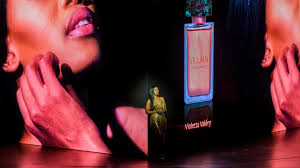
More specifically this Traviata takes place in a world (and on a stage) flooded by digital content. The spectacular set by Bob Cousins features two towering, conjoined and reflex-angled video screens on a vast revolving stage; at full revolve the reversed and obtusely-angled sceens become blank white and merge with a similarly white floor to create an endlessly receding and featureless horizon. When facing the audience, the video screens display ever-changing footage (video design by Zak Hein), from an opening close-up of Violetta’s closed and heavily made-up eyes – which slowly blink open as the haunting overture to Act 1 begins (echoing one of the obsessive motifs of French surrealism as well as suggesting the role of surveillance, ‘the gaze’, hyper-visibility and visuality generally in postmodern culture) – to a recurrent marketing image of Violetta/Yende (role and singer being effectively indistinguishable here) promoting a perfume called ‘Villaine’ on a giant advertising billboard which overlooks much of the rest of the Act. 

The screens are also continually traversed by scrolling emails, texts, emojis, newsfeeds, social media posts, bank statements and medical records. The effect is that real and virtual, private and public realms dissolve into each other in a société du spectacle that becomes indistinguishable from its representation on the stage/screen. This extends backstage as well as into the auditorium and foyer of the opera house at the Palais Garnier before the show and between the acts during the live digital broadcast screened in cinemas. The result is that as an audience (and even more so in the cinema) we ourselves feel as if we are not merely spectators but voyeurs participating in Violetta’s downfall.

Against the morphing and shifting backdrop of the screens, the continuously revolving stage transports the characters on a ceaseless journey from one narrative location to another. This occurs most effectively in Act 1, which becomes an all-night party, beginning with Violetta jumping a queue outside a club, then heading inside for her set-piece brindisi (‘Libiamo’) with Alfredo (French tenor Benjamin Bernheim), before leaving through the kitchen to a back lane (‘Oh, quai pallor/Un di felice eteara’), and then wandering the streets of Paris (‘E strano/Ah, fors'è lui che l'anima’) to a kebab-stand beside the Joan of Arc statue in the Place des Pyramides, where her closing love duet with Alfredo (‘Sempre libera’) takes place via SMS while he sits at his laptop in an internet café. 

Act 2 Scene 1 ran aground for me both scenically and dramatically as the production literally and metaphorically lost momentum when the action shifted to the country retreat where the lovers have fled from Paris, and where Alfredo’s bourgeois father Germont (Québécois baritone Jean-Francois Lapointe) tracks them down, confronts Violetta and persuades her to leave his son. Act 2 Scene 2 on the other hand drifted into the doldrums of recycled trash-camp at Flora’s party back in Paris, where an impressive array of fancy-dress costumes (designed by Alice Babbage and decorated with randomly protruding dildos) failed to enliven an orgy even more inert than the one in Kubrick's Eyes Wide Shut. 

In this context the function of the ‘gypsy’ and ‘matador’ choruses (surely intended by Verdi to represent hired entertainers doing double-duty as sex-workers as well as to represent a ritual of death) seemed dramaturgically unclear, while Alfredo’s drunken e-gambling on an iPad (with his winnings displayed on the overhead screens) felt more like stage-technological gimmickry than convincingly motivated scenography. As for the climax of the scene, Alfredo’s challenge to Violetta’s former lover the Baron Douphol (French baritone Christian Helmer) to fight a duel to the death, followed by his verbal and physical abuse of Violetta, and his father’s unexpected entrance and reprimand, all seemed enervated and lacking in dramatic intensity. 

Things became more interesting again in Act 3, which began with Violetta languishing in a hospital ward in the terminal stages of consumption. The revolve then took her on a hallucinatory journey back through the street-scenes of Act One (recalling the closing shots of Antonioni’s L’eclisse, where the camera revisits the locations where the lovers have met throughout the film) for her nostalgic farewell aria (‘Addio, del passato bei sogni ridenti’), before arriving back at the hospital for her final trio with Alfredo and Germont (‘Prendi, quest'è l'immagine’) and then departing through a slowly widening chasm between the dark and empty video screens, as if disappearing through a fissure in social reality into a kind of ontological void.

The key performance was of course Yende as Violetta, who looked and sounded luminous (especially in her shimmering gold sequin dress in Act 1), but who struggled at times with the demands and complexity of the role both musically and dramatically. In this she was not helped by the generally glacial tempi adopted by conductor Michele Mariotti, and too often sounded plaintive rather than energized, not only when overcome by illness in Act 3 but also in the more spirited passages of Acts 1 and 2, when the role required her to embody the wilful courtesan or passionate lover. 

Bernheim as Alfredo was more successful, with a gloriously relaxed lyric tenor voice and easy stage presence; but again – partly because of the tempi but also Stone’s direction – he seemed fatally passive almost to the point of defeat from the very beginning of the opera, often appearing more interested in the contents of his smart phone than in what was happening around him onstage. In the third crucial role, Lapointe’s Germont was both over-acted and under-sung, laying on the sentimental pity for Violetta but failing to underline his character’s critical role as the voice of patriarchal authority  and bourgeois hypocrisy. 

Most problematic for me was Stone's decision to make Violetta a celebrity 'influencer' and fashion icon. This glosses over the economic precarity of her position as a courtesan, along with the sexual and class dynamics that underpin her fragile social status (not to mention her physical health). To be sure, the toxic nexus of social media, advertising, narcissism and commercial interests might be seen as a form of prostitution, which is arguably just as exploitative, degrading and even destructive. To turn Violetta into Kim Kardashian is however to give her significantly more social agency than she possesses in the original opera. It also reduces the physical dimension of her way of life and means of survival, which is essential not only to her tragedy, but to the musical and libidinal energy of the opera itself. Perhaps this explains why Stone's direction, Mariotti's conducting and the performances of the singers all seemed lacking in vitality. 

In a pre-show foyer interview Stone cites Meghan Markle as a current-day analogy with Violetta in terms of being ostracized because of race and class. However Markle (as well as being somewhat more secure in her social status than a courtesan) is as outspoken about her feminism and progressive politics as she is about the challenges of being mixed race, and is targeted so viciously in the media and online because of conservative, sexist and racist expectations regarding the wife of a British royal. In contrast, Stone makes Violetta the acquiescent celebrity girlfriend of a contemporary bourgeois, while the latter is reconceived as (in Stone’s words) ‘a writer, artist or architect’ – in other words, a member of the knowledge/culture class, making it less likely that his association with a media superstar (regardless of race) would be in any way scandalous.

Gender, race and class interact with each other in complex ways, and their meaning and significance depends on this, as well as on historical context. In nineteenth century Paris, the hypocritical morality of bourgeois patriarchy (Germont) colluded with the reactionary trappings of a residual aristocracy (the Baron Douphol) and the permissive ethos of the demi-monde to engineer a situation in which marriage, sex and romantic love were entirely separate transactions. It is the tragedy of Violetta and Alfredo that they cannot resolve this contradiction. However in Stone’s production Violetta’s illness – here implicitly cancer rather than tuberculosis, which in the 19thCentury was associated with syphilis, another shameful disease of contagion – is the only tragedy, rather than the contradictions of class, with which it no longer bears any relation.

As for the issue of race – alluded to by Stone in the comparison he makes with Meghan Markle, and possibly reflected in the casting of Yende as Violetta – this is very different in the case of a global supermodel or social media starlet, a British royal’s wife, a 19thcentury French courtesan, or a contemporary South African soprano; indeed opera singers are now increasingly (and happily) cast with as little regard to race as age or body-type. If anything, the colour of Yende’s skin only enhances her status as a stage beauty when she enters as Violetta in a gold dress with an expensive clutch under her arm and saunters past the other fashionistas outside the club; and her race effectively disappears as soon as she begins to sing – which is surely as it should be. 

*

La Traviata directed by Simon Stone for the Paris Opera opened at the Palais Garnier on 12 September. It was digitally broadcast and shown in cinemas as part of the Palace Opera and Ballet screenings from 15 November.

Tuesday, 23 July 2019

Postcard from Perth 59


WA Opera, Sweeney Todd


The tale of Sweeney Todd – the ‘demon barber of Fleet Street’ who slit the throats of his victims and then passed on their corpses to Mrs Lovett, who made them into meat pies – was first published in a Victorian serialized novel or ‘penny dreadful’ called ‘The String of Pearls’, and almost immediately turned into a stage melodrama. It rapidly became the stuff of urban legend; subsequent versions included a 1936 silent horror film (starring the deliciously named Tod Slaughter) and various stage adaptations of the original story, including a 1973 play by Christopher Bond (whose subsequent adaptations include The Beggar’s Opera, A Tale of Two Cities and Dracula), which in turn provided the source for Stephen Sondheim’s 1979 musical. Bond’s play elevated the tawdry plot into a revenge tragedy by providing Sweeney with a motive (or at least a psychopathological explanation) for his crimes: his wrongful conviction and transportation to Australia at the hands of the unscrupulous Judge Turpin, who rapes Sweeney’s wife (who in turn goes mad) and adopts his daughter for his future perverse sexual enjoyment. 

Sondheim seized on Bond’s play as the basis for his most complex work of musical theatre – or some would say opera, depending on the theatrical context and musical forces employed. The composer himself called it a ‘musical thriller’ or ‘black operetta’, and insisted that it was a psychological study in ‘obsession’. Hal Prince’s original Broadway production, however, emphasised the story’s origins in the Industrial Revolution by setting it on a stage dominated by a huge reconstructed iron foundry (a staging which has some parallels with the Boulez/Chereau interpretation of Wagner’s Ring a few years earlier). As such, Prince drew attention to the social-historical dimensions of the work, which Sondheim himself denied, but are arguably latent in the libretto and score: the former invokes a strong sense of social injustice, while the latter includes factory whistles as well as pounding rhythms and whirling ostinatithat recall the primitivism of early Stravinsky and Bartok, the minimalism of John Adams and the film scores of Bernard Hermann.

The WA Opera remount of Stuart Maunder’s production (originally staged by Victorian Opera in 2015) follows in the footsteps of the Broadway original, with Roger Kirk’s set design featuring a looming 19thCentury industrial cityscape of painted brick. A movable two-storey structure places Lovett’s cramped pie-shop beneath Sweeney’s upstairs barbershop; a trap-door beneath the barber’s chair opens onto a central chute like a gullet down which his victims plunge to the bakehouse in the basement. To one side of the stage another towering structure represents Judge Turpin’s house, where Sweeney’s daughter Joanna appears trapped on the balcony like a fairytale princess. The Victorian Gothic atmosphere extends to the whole stage when the architecture is cleared away to make room for the picaresque Soho street-scenes, Fogg’s lunatic asylum, or the subterranean bakehouse with its meat-grinder and fiery oven. All of this is spectacularly lit by Philip Lethlean, with green fingers of light spreading out through the haze beyond the proscenium like a Hammer horror film come to life, especially in the venerable Edwardian splendour of His Majesty’s Theatre in Perth. 

All of this is given added punch by the considerable forces of the WA Symphony Orchestra, the WA Opera Chorus and the principle singers, including both operatic and more music-theatre-trained voices. Antoinette Halloran in particular steals the show by making the leap from opera to musical theatre, with an interpretation of Mrs Lovett that manages to be grotesque, witty, sentimental and tragic in her greed, lust, intelligence and ultimately doomed love for Sweeney; baritone James Clayton is both fearsome and pitiable as an almost Scarpia-like Judge Turpin; and recent WAAPA Music Theatre graduate Joshua Reckless is initially touching and later spooky as Mrs Lovett’s devoted but eventually deranged apprentice Tobias. 

The big let-down for me was Ben Mingay in the leading role. Sweeney is a complex character, and needs to be both sympathetic and genuinely terrifying. Mingay simply didn’t have the acting chops to embody this, and his mellifluous voice remained safely in the realm of Romantic opera, without ever taking on the raw edge of sheer madness required by the role. To be sure, in this respect it has something in common with certain operatic roles (Wozzeck, Peter Grimes); and certain opera singers who are also actors could certainly go there (James Clayton for one); but for my money, in all its cheap, messy, sensational penny-dreadful glory Sweeney Todd still belongs in the realm of musical theatre rather than opera; and in the end, there was something a little too neat and tidy about this production, for all its undoubted musical and dramatic pleasures.

*

Sweeney Todd played at His Majesty’s in Perth on the 13th, 16th, 18thand 20thof July. 


Tuesday, 16 July 2019

Postcard from Perth 58


Feet First Collective, S-27, Fremantle Arts Centre


S-27 (or Security Prison 27) was a former secondary school in Phnom Penh that was used by the Khmer Rouge to imprison, interrogate, torture and execute those who were deemed to be enemies of the regime. From 1975 to 1979 an estimated 20,000 people were incarcerated there, of whom almost all were killed. Forced confessions and denunciations were used to arrest others – including family members and friends – who were in turn tortured and killed, in a vicious cycle. The prisoners were photographed on arrival and forced to give an account of their lives up to the time of their arrest, before being stripped of their clothes and belongings and sent to their cells to await interrogation. Many of the prison guards were teenagers or in their early twenties – including children taken from prisoner families – and lived in terror of breaking the rules and being arrested, interrogated and killed themselves.  

British playwright Sarah Grochala’s play S-27 was first produced at the Finsborough Theatre in London in 2009. Based on prison records and interviews, the play is set in an abstract fictional world that makes no direct references to Cambodia (there are no geographical markers, and the characters all have English names) but that clearly draws on the unique circumstances of that particular hell. 

The action takes place in a room where prisoners are photographed and interrogated on arrival before being sent through a doorway – implicitly to their deaths. The central character, May [in a tight-lipped performance from Gabriella Munro], is a young female prison photographer, and the play consists of a series of physically as well as emotionally torturous interactions between May and a procession of newly arrived prisoners, including a former policeman from her village [Samuel Addison], a woman with a newborn baby [Caitlin Griffiths], and a former lover [a touchingly vulnerable performance from Samuel Ireland] – as well as her equally immature but more emotionally hardened colleague, June [Trinity Emery Rowe]. 

S-27 is a relentless study in betrayal and the cost of survival. The writing is sharply etched and rigorous, and the action and emotions heightened and taut. It reminded me of Brecht’s The Measures Taken, which has been much misunderstood as an apologia for revolutionary violence and rigidly enforced party discipline, whereas Brecht himself pointed out that it was actually a story about someone who participates in their own self-extermination. As one of the most famous passages in that play clearly states:

It is a terrible thing to kill.
But not only others would we kill,
But ourselves too if need be,
Since only force can alter this
Murderous world, as
Every living creature knows.

In a sense May too – and even more so her emotionally damaged colleague June – are engaged in an act of self-murder (the German word for suicide, Selbstmord, seems appropriate here) regarding their souls if not their bodies (though physical extinction is also their likely ultimate fate).

This production of the play by Feet First Collective is directed by Teresa Izzard and staged at Fremantle Arts Centre – a 19thcentury Gothic structure of local limestone built using convict labour, which was formerly used as a psychiatric hospital or ‘asylum for the criminally insane’ and later as housing for homeless women and ‘delinquent girls’. As such it has a somewhat sinister and even haunted ambience, especially at night. 

The performance began in ‘immersive’ mode, with the audience aggressively rounded up and herded inside one of the buildings by the cast, who were dressed as black-clad guards and armed with truncheons. We were told to form two lines, and our valuables confiscated, before each being given a lanyard with a number and marched upstairs. Those of us who had chosen at the box office to wear a wrist-band indicating that we were willing to be manhandled by the performers were singled out for special abuse and mistreatment. Meanwhile some of the ‘guards’ were dragged off by others to be interrogated for failing to do their duty, and angry shouts and cries of terror were heard echoing through the building.

I found this the weakest part of the performance. It felt somewhat unconvincing (and even a little tasteless) to be treated like prisoners, especially while holding plastic glasses of wine in our hands; and the actions and demeanour of the ‘guards’ were (perhaps inevitably) a little half-hearted. Things improved once we were seated in traverse in an upstairs room, and the play was performed in a more or less traditional format, apart from stylised ‘post-modern’ movement sequences between each ‘scene’, which I felt were a little affected, especially in the context of such a brutal and uncompromising play. I also felt that the emotional and technical demands of the play and the production were somewhat beyond the reach of a young and relatively inexperienced cast. Despite some highly atmospheric original music by Rachael Dease and subtle lighting by Andrew Portwine, the production as a whole seemed to fall slightly uneasily between student and professional standards of expectation, so that I wasn’t quite sure what genre of performance I was watching, or how to engage with it. Consequently the play itself didn’t hold me as powerfully as I felt it would in more confident hands.

In sum: S-27 is a gripping and complex play about a harrowing period in history, which has important things to say about dehumanisation that are more relevant than ever today, when systems of surveillance and punishment are on the rise even in so-called democracies like our own. As such, this is a worthwhile production, even though some of the artistic choices – in particular the gesture towards ‘immersive’ staging – didn’t entirely come off.

*

S-27 is at Fremantle Arts Centre until Sunday July 21.