Tuesday, 21 December 2021

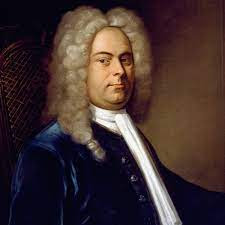
Handel’s Messiah

Perth Symphonic Chorus, Perth Baroque Orchestra

Perth Concert Hall

Saturday 18th December 


Foreword


Dear Readers


Please welcome to the pages of this blog my good friend and colleague Wolfgang von Flugelhorn, who will henceforth from time to time be posting reviews and commentary here and elsewhere, whenever I am too busy to do so. Wolfgang is a lover of theatre and the arts like myself, as well as being a fellow artist in his own way, though his work is not well known, except among a small circle of friends and admirers. He and I have known each other since childhood, and we share a similar outlook on things, though of course he has his own point of view and way of expressing himself. We don’t always agree, but I have always found his opinions stimulating, even if somewhat eccentric and at times a little overheated. In any case, I hope you'll enjoy his contributions to this little space for critical reflection.


At Wolfgang’s prompting I have also changed the title of this blog – formerly known as ‘Postcards from Perth’ – to ‘After Words’. In part this reflects the fact that these posts can no longer be adequately described as ‘postcards’; nor are they always ‘from Perth’. As for the new title: Wolfgang informs me that it derives from the German term Nachwort, which literally means ‘afterword’. However he also wishes to convey by it something of the Yiddish term Trepwerter (‘staircase words’), which in turn derives from the French expression l’esprit de l’escalier and its German equivalent Treppenwitz (or ‘staircase wit’, referring to the psychological phenomenon described by Diderot 'when a sensitive man…overwhelmed by the argument levelled against him, becomes confused and doesn't come to himself again until at the bottom of the stairs’.


Humphrey Bower


Handel’s Messiah

By Wolfgang von Flugelhorn 


As I arrived at the Perth Concert Hall – one of my favourite venues both acoustically and as a work of early 70s poured concrete brutalist architecture – for Saturday night’s performance of Handel’s Messiah, I noticed a man wearing an Australian flag t-shirt with a second, actual Australian flag draped over his shoulder making his way from the carpark towards a large crowd in the park nearby. Then I heard the amplified voice of an angry male speaker telling the crowd to put the WA Premier ‘between a rock and a hard place’. Presumably it had something to do with Covid-related mandates and restrictions rather than the Messiah, though the aria ‘Why do the nations so furiously rage together, and why do the people imagine a vain thing?’ did spring to mind.


Inside the Concert Hall I was informed by a fellow patron – who asked if she could share my table in the first-floor lounge while we waited for the concert to begin – that her companion was running late because of traffic congestion on the freeway generated by the protesters; and throughout the first part of the oratorio latecomers trickled into the auditorium, though none of the singers seemed nonplussed by the distraction. 


Handel wrote his great series of English-language oratorios in response to the declining popularity of Italian opera (a genre in which he had previously excelled) in London during the 1730s and 1740s. The subject of Messiah was suggested by his librettist Charles Jennens, who supplied him with a compilation of texts from the Old and New Testaments alluding to the coming of Christ, his crucifixion and resurrection, and the future resurrection of humanity. Despite Handel’s genius for drama, the work is unusual among his oratorios (and stands in contrast to those of Bach) in that it contains no dramatic roles, quoted speech or even a dominant narrative voice. It is more like a reflection on the idea of Christ as Messiah, with the soloists and choir as anonymous and in a sense impersonal (though no less impassioned) speakers with whom we can all the more readily identify. It is arguably this in combination with Handel’s dramatic flair and gift for melody that accounts for the work’s extraordinary appeal, which is evident in the propensity of audience members to participate by spontaneously singing along. At times I found myself struggling not to do likewise, though I felt no desire to stand up for the ‘Hallelujah’ Chorus, a tradition attributed to the anecdote that King George II did so during the first London performance, thus effectively compelling his subjects to follow suit.


I have long resisted the Messiah. When I was a schoolboy on a student guest program in Melbourne and was housed with the family of my future friend and colleague Humphrey Bower, we visited an English schoolmate and his parents who played a recording of the Messiah during dinner (followed after dessert by The Mikado). The former was one of those overstuffed performances featuring a huge 19th century orchestra and massive choir which became something of an English-language tradition after Handel’s death, but never took hold in his native Germany. 


When I later heard the work in a humble church back home in Lower Flugelhorn played and sung by smaller forces as Handel wrote it, the effect was a revelation. Instead of being infused with 19th century British Imperial pomp and circumstance here was a tender, delicate work of 18th century German Lutheran Pietism (and its English-language Protestant counterpart). The Messiah is not a collective celebration of historical triumph – of whatever religious, cultural or national stripe – but a deeply felt message of personal salvation.


It was just such a performance that I heard at the Perth Concert Hall on Saturday night. The Perth Symphonic Chorus is a medium-sized choir of 50-odd choristers, but under the guidance of their founding director and local Perth legend Margaret Pride they sang with a combination of restraint and clarity that was eloquent and touching. Similarly, the Perth Baroque Orchestra (sensitively led by concert master Paul Wright) is a chamber orchestra of 20-odd players (many of them familiar faces from WASO) which included a smallish string section, three cellos, two double basses, two oboes, a bassoon, two trumpets, one timpani player, a harpsichordist and an organist, and featured outstanding playing from Wright, principal oboe Liz Chee, and principal trumpet Jenny Coleman. Again, Pride’s conducting was both deeply thoughtful and self-effacing, allowing the music to express itself without undue emphasis. The use of modern rather than Baroque instruments gave the strings a velvety sheen, and the winds a ripeness of colour and steadiness of intonation, but the smaller orchestral forces and the transparency of Pride’s conducting conveyed the felicities of Handel’s score with great charm and intimacy. 


As for the soloists, all four possessed richly rounded operatic voices, but knew how to hold back when necessary and let the words and music speak without excess garnish. Tenor Paul Lewis and soprano Rachelle Durkin stood out: the former delivering his arias with a heartfelt sense of yearning, and the latter with a creamy richness that was brimful of vitality, especially in my favourite aria ‘I know that my Redeemer liveth’, which settles everyone down after the ‘Hallelujah’ chorus and reminds them that the work is not yet over and that the best is yet to come. Mezzo Fiona Campbell sang with a calm and peaceful evenness of mood and tone; and dashing young baritone Jake Bigwood made a commanding debut on the Concert Hall stage without overloading things vocally or dramatically.   


The performance was received by a capacity audience with rapt attentiveness and enthusiasm – with prolonged applause and added stomping from the orchestra at the end for Pride, who leaves her position with the choir next year after 25 years at the helm. As a friend and colleague remarked on the way out afterwards: ‘That was the best Messiah I’ve ever heard; and I’ve heard a lot; and sung in some of them.’


As I descended the steps outside the Concert Hall and unfolded my collapsible bicycle there was no sign of the anti-government protesters, and despite some congestion in the carpark caused by departing concert goers, the traffic on the freeway was flowing again.


‘Behold, I tell you a mystery: we shall not all sleep, but we shall all be changed.’


*


Wolfgang von Flugelhorn is a writer, critic and non-conceptual artist based in Perth, Western Australia. He was born in Flugelhorn, a small town in Upper Austria, in 1963. He is editor of the Zeitschrift für Unsozialforschung (Journal of Anti-Social Research) and Emeritus Professor at the University of Lower Flugelhorn where he holds a chair in Paranormal Phenomenology while engaging his core muscles for two minutes every day. He is the author of several monographs including Unlogische Untersuchungen (Illogical Investigations), Sein Unzeitlich (Not Being On Time) and Wahnsinn und Methode (Madness and Method), all of which have been translated into English by Humphrey Bower but none of which has yet been published in any language.  


Monday, 11 October 2021

Animal Farm

Adapted by Van Badham
Black Swan State Theatre Company
Heath Ledger Theatre, State Theatre Centre of WA


George Orwell’s Animal Farm (first published in 1945) is a satirical novel about the Russian Revolution that uses animals to represent specific social-historical classes and individuals. Orwell himself was a democratic socialist, and this perspective sharpens his critique of Bolshevism, which he saw as a total betrayal of everything socialism stood for. The human characters in the novel represent the pre-Revolutionary aristocracy and bourgeoisie, with Farmer Jones standing in for Tsar Nicholas, and the neighbouring farmers representing the other ruling and owning classes abroad. Pigs represent the Bolshevik vanguard (with Old Major as Lenin, Snowball as Trotsky and the villainous Napoleon as Stalin), and other animals such as horses, donkeys, sheep, cows, chickens, crows, cats and dogs represent the agrarian, industrial and other workers who are exploited, oppressed and manipulated by their feudal and capitalist overlords. In a particularly sinister transposition, dogs become the police employed both by the despotic Tsarist regime and by the totalitarian Bolshevik one that follows it. 


Orwell’s fable extends beyond the Russian Revolution to criticise the totalitarian impulse throughout history, whether this is manifested on the left or the right. The characters in Animal Farm have a universality as social-psychological types which speaks to us no matter who or where we are. Moreover, Orwell’s literary skill gives them a three-dimensional individuality that makes us believe in them, fear them, care about them, and even identify with them. We know or can imagine what it’s like to be dominated by pigs or terrorised by dogs; to be exploited and oppressed like the patient and obedient workhorse Boxer; to be led and manipulated like sheep; or even (if we are honest) to be tempted or corrupted by power or the allure of material possessions. One way or another, for better or worse, we are all animals deep down. 


Van Badham’s contemporary stage adaptation extends itself horizontally rather than vertically, so to speak, to address contemporary struggles for social and racial justice, animal rights and environmental sustainability, as well as the populism of Donald Trump and the distortion of truth by politicians which is amplified by mainstream and social media. Unfortunately this broad-brushstroke approach fails to convey either the specific or the general thrust of Orwell's original critique. The result is artistically as well as politically incoherent, and squanders Orwell’s legacy as a writer, journalist and critic, a legacy which is still relevant today if we listen to what he has to say. The quality of the writing also falls far short of Orwell’s in terms of craft, humour or insight. Perhaps inevitably this failure extends to the production, including the design, direction and even the performances, despite the best efforts of all three actors, who play multiple roles.


The set consists primarily of a vast screen that descends from just behind the proscenium, onto which satirical comedy sketches are projected representing mainstream and social media coverage and commentary on the animal revolution as it unfolds. The content mimics typical TV or online footage and is (correspondingly) crudely shot and edited; it’s also (for the most part) painfully unfunny, despite the actors’ comic skills. This screen dominates the stage and is dark for about 50% of the show. In other words, there’s a lot of dead space, which extends upstage, as most of the area beyond the screen is visibly empty and unused. The actors have to avail themselves of a small area in front of the screen, including a low metal balcony which is accessible from the wings and leads to the forestage via a set of stairs. Beyond the screen, rows of metal barriers are visible that could represent empty animal pens. The floor, walls, balcony, stairs and barriers are all painted black, and the overall ambience is one of coldness and gloom, which kills off any sign of life or attempt at comedy on the part of the text or the performers.


This sense of lifelessness is no way the fault of the valiant and talented trio of actors, who appear in various guises for what are mostly brief vignettes or overlong expositional monologues. These are delivered with great energy and comic timing but mostly fall flat because of the clumsy writing and staging. There is also a lack of depth to the performances which can likewise be attributed to the slipshod nature of the adaptation and production. British accents are used for some of the characters, such as Old Major and the neighbouring farmers, perhaps as a nod to the original novella or as some kind of reference to Brexit (though neither Old Major nor Jones and his fellow property-owners seem like Brexiteers); whatever the reason, the effect is inconsistent and confusing, as the rest of the show seems to be set in a dystopian version of Australia, apart from the Trump-like portrayal of Napoleon. As for the representation of the animals themselves, despite the addition of strap-on animal noses, ears and tails, and the sporadic mimicking of animal sounds or movements as if they were some kind of involuntary vocal or physical tics, there is no real sense of embodiment or transformation from human to animal. The overall result is a kind of pantomime which hardly does justice to Orwell or the characters.


Whether considered as representatives of historical classes and individuals, social-psychological types or three-dimensional characters, Orwell’s animals (like Aesop’s, La Fontaine’s or Kafka’s) are fundamentally versions of human beings. This deliberate anthropomorphism has the simultaneous effect of humanising them (and thus enabling us to empathise with them) and of rendering visible what is animalistic in our own nature, and thus giving us an estranged, almost Brechtian perspective on ourselves. 


However, the adaptation falls short of this level of critical anthropomorphism because it lacks both the humanity and the animality to embrace it. Instead it parodies the animals and their ‘animalist’ revolution. In doing so it mocks all struggles for justice and trivialises the forces of authoritarianism, populism, capitalism, racism, sexism, able-ism and species-ism they are struggling against. This trivialisation is epitomised when a video segment plays out on the screen featuring the actors dressed as chickens and advocating for their right to lay eggs in freedom while the slogan #chickenlivesmatter flashes beneath them. Some people in the audience laughed, but I found it utterly insensitive to Black lives, and cringed to imagine how any person of colour watching it might feel.


The emblematic misjudgement of the entire show is the clownish impersonation of Trump (dressed in Napoleonic drag) as the Stalinist pig dictator Napoleon. Trump is no Stalin, and the analogy between Trumpism and Stalinism (or for that matter between Bolshevism and contemporary left-wing or right-wing populist movements) is an entirely false equivalence. Orwell’s Napoleon is a penetrating portrayal of the authoritarian personality (and could perhaps with some adjustments be adapted to fit Putin or Xi Jinping); but Stalinism is an inaccurate characterisation of the demagoguery that currently passes for leadership in so-called liberal democracies. Perhaps a strutting, preening, red-faced, racist, sexist, xenophobic, nationalist turkey would be closer to the mark. However, that would require a much more radical rewriting of Animal Farm, one that departed further from the letter of the original while remaining truer to its spirit. In fact, it would require nothing less than a brand new play.


*


Animal Farm is at the Heath Ledger Theatre until October 24.


Tuesday, 8 September 2020

Artists at the Forefront 


The following is a slightly expanded version of an article recently published on the ArtsHub website, which was in turn based on a short paper I gave in July at the Artists Hub run by Performing Lines WA at Subiaco Arts Centre in Perth. I thank Daisy Sanders and the staff at Performing Lines for allowing me to present the original paper at a session entitled 'Artists at the Forefront'. I also thank the participants at that session for the generous discussion afterwards which contributed to the piece in its expanded form. Finally I thank the editor of ArtsHub Richard Watts for publishing the original article, as well as for choosing the images of Perth ensemble The Last Great Hunt and Geelong-based ensemble Back to Back Theatre Company.

*

In July at Subiaco Arts Centre in Perth I heard representatives from ten local performing arts organisations speak about the impact of Covid-19 on their activities. Some spoke about using JobKeeper to retain staff. Others spoke about employing digital and other strategies in response to venue closures, loss of income and restrictions imposed by physical distancing. One artistic director proclaimed that fundamentally their organisation hadn’t changed. Most were looking forward to things returning to normal. 
 
The following week at the same venue I heard representatives from four major performing arts festivals speak about how the pandemic had disrupted their plans. Some spoke about having to cut back on programming, or even postpone their festivals completely. Others spoke about responding to the pandemic in novel ways, for example by only programming local work. Most were looking forward to things returning to normal.
 
I’m a freelance actor, director and writer, and an independent theatre maker. 
 
I don’t want things to return to normal.
 
*
 
Let me begin with some statistics – not about the pandemic, but about our industry.
 
A report on Working in the Entertainment Industry released in 2016 showed that over a third of performers interviewed reported mental health problems. The incidence of depression among arts and entertainment workers is 5 times higher than the national average; moderate to severe anxiety is 10 times higher. Suicides are double those in the general population. Five arts and entertainment workers a week attempt suicide. 

The report attributes this in part to racism, sexism, bullying and harassment in a stressful and competitive industry. However, it also cites the following income and employment statistics:


·      63% of all performers earn less than the National Minimum Wage of $34,000 
·      75% of actors earn an annual industry income of less than $30,000 a year (the situation is even worse for dancers and musicians)

 
A reminder: this was four years before the pandemic closed down theatres and put most performers out of work. 
 
These statistics are ‘normal’.
 
These are my friends and colleagues. These are the students we’re training in our performing arts academies; these are the young people, and the people from diverse communities, that we're supporting and encouraging to become artists.

The issue is not just lack of income, but security of employment. Most artists are employed on short-term contracts for a couple of months at a time, sometimes once or twice a year, sometimes less. There’s no continuity of work, and no discernible career-path.
 
This needs to change.
 
*
 
The psychologist Abraham Maslow refers to security needs as the next level up from basic physical needs like food, water, clothing and shelter. Clearly, artists suffer from a deficit when it comes to income and job security. This has an impact not only on their physical needs, but also on their emotional needs, which are just as important in terms of their physical and mental health. Specifically, it leads to a more or less permanent state of anxiety.


The next level up in Maslow’s hierarchy of needs are love and belonging needs. Artists may receive love and a sense of belonging from their friends and families – and even up to a point from their colleagues, audiences and communities. However, their sense of belonging or being valued is precarious when it comes to their work, because of the inconstant, atomised and competitive way in which they’re currently employed. Again, this leads to a constant state of anxiety, as well as regular bouts of depression.


Next level up again are social and self-esteem needs, where a similar deficit applies. Certain artists are celebrated for their achievements, but even celebrities know they’re not valued as human beings, but as commodities to be bought, sold, consumed and profited from.

(You’ll notice that I’ve shifted from the language of psychology to politics and economics. That’s because I want to talk about systemic problems, and systemic change, rather than addressing things at the level of therapy or self-help. The latter is the kind of language we’re good at using as artists, because we’re used to talking about and working with our emotions. The problem with this is that we reduce everything to the level of the individual, ­instead of looking at things systemically and addressing them collectively.)

At the top of Maslow’s hierarchy is self-actualisation. For an artist, this doesn't mean something nebulous or spiritual; it means being able to practice their art. A singer needs to sing; a dancer needs to dance; a musician needs to play; an actor needs to act. However, the industry as it’s currently structured prevents artists – and especially performers – from being able to work except in a sporadic and unpredictable way. This leads to what behavioural psychologists call learned helplessness. It also leads to chronic doubt, shame and eventually despair. (If I’m not working as an artist, am I even worthy of the name?)
 
Finally it has a debilitating impact on artistry. Without being able to consistently practise your craft, your skills atrophy, and your artistry suffers. As a performer in particular you need to practise with other artists, and in front of an audience. 
 
Imagine a teacher, doctor or nurse being unable to consistently practice their vocation. Then imagine schools and hospitals staffed by administrators and hiring teachers, doctors and nurses on a short-term or casual basis. (Actually, we have a model for this with nursing homes – renamed ‘aged care facilities’ – employing a casual workforce of health workers. Similarly, we now have theatre companies which might be described as ‘theatre facilities’. No wonder the results are often similarly deadly.)
 
Now imagine an orchestra or a band without permanent members that simply hired sessional musicians for every concert or gig they played. Would it even have a recognisable sound? Would you even call it an orchestra, or a band? 
 
The great theatre and dance companies of the world have been – and still are – ensemble companies. Shakespeare, Moliere, Chekhov and Brecht wrote their plays for ensembles, and their most famous and enduring roles for particular actors in those ensembles. The great theatre companies of today – like the Schaubühne Berlin, the Toneelgroep Amsterdam, the Maly Theatre in St Petersburg, or the Royal Shakespeare Company in the UK – are all ensemble companies; and the great theatre directors of today ­­­– like Ivo van Hove or Thomas Ostermeier – are the long-term artistic directors of those companies. The same is true for the great choreographers, past and present. 

The difference between these European companies and their Australian counterparts is not simply more funding, but a different model of what a theatre company actually is: a company of artists. It’s a difference in artistic priorities.
 
Permanent employment in the arts in Australia has largely been reduced to administration and marketing in companies and organisations with a few niche labels and slogans attached: young people’s theatre; First Nations theatre; diversity; disability; women; queer and trans artists. Let me be absolutely clear: diversity of representation and participation in the arts is crucial; but diversity without the possibility of having a sustainable career as an artist is at best window dressing, and at worst an insult to those communities. It’s like telling them: ‘You can be an artist, but it’s not a real job.’ 
 
The same applies to having power and agency, which is just as important as regular income and employment. Performers and other artists (apart from artistic directors, who currently aren’t necessarily directors or even artists) scarcely have a voice at the table when it comes to decisions that affect them directly, such as artistic programming, funding or arts policy. Once again this leads to learned helplessness. It also leads to poor artistic decisions, and poorly realised artistic outcomes. Fundamentally it robs artists of dignity by treating them like children rather than adults capable of making decisions for themselves.
 
We’re all friends and colleagues in the arts, but like every other industry it’s divided between those who have decision-making power and security of income and employment, and those who don’t. In the performing arts, this currently means the difference between those who work in arts management and administration and virtually all artists – 80% of whom at any one time constitute what Marx called ‘the reserve army of the unemployed’. 
 
In the current crisis of a pandemic, coupled with the last round of Australia Council funding cuts, the brutal truth is that we are not ‘all in this together’. For example, JobKeeper is designed to retain employees who’ve worked for the same business for more than 12 months. This means it doesn’t support most artists or technical crew who are only employed on short-term contracts. 
 
As Artistic Director at Belvoir Street Eamon Flack recently put it in an interview with The Sydney Morning Herald back in April: ‘The situation we are in now is absurd. We have a theatre sector with no actors. Or to speak the language of government, we are an industry with no essential workers. Because what’s an arts company without artists making art? It’s like a plane without a pilot or a hospital with no nurses. It’s ridiculous. The whole sector has become something out of a satire.’ 
 
I agree, but Eamon’s description doesn’t just apply to the absurdity of JobKeeper; it perfectly describes the situation that already existed before the pandemic hit. And it’s been this way for way too long. 
 
*


What is to be done?
 
The first thing is to put artists first: because without artists there is no art, and no arts industry.
 
It’s no use simply saying we need more funding. Funding for whom? The answer, I suggest, is more funding for artists– excellent, innovative, diverse, Australian artists, to be sure, telling diverse Australian stories in excellent and innovative ways; but they can only be and do those things if they can have sustainable and viable careers and career-paths as artists
 
It’s not enough to blame the government or the community for not valuing artists. We do it to ourselves – or more precisely, we let the industry do it to us. 
 
Here are some proposals that could form the basis for having a sustainable career and a viable career-path as a performing artist, and therefore a performing arts industry worthy of the name.
 
1.     The majority – or at least 50% – of all permanent employees across the performing arts industry should be practising artists
 
By ‘permanent employees’, I mean they have job security for at least a year (or multi-year contracts) as well as standard employment conditions like annual leave and sick leave, just like artistic support staff. By ‘practising artists’ I mean they’re employed to practice their art. 
 
Note: the point isn’t that the majority of artists should be permanent employees; it’s that the majority of permanent employees across the industry should be artists. The point is to close the gap between artists and support staff in terms of employment. 
 
2.     The majority – or at least 50% – of the permanent employees of all major performing arts companies should be practising artists.
 
This could be as artistic directors or as resident artists: e.g. associate directors or choreographers, resident playwrights, dramaturgs, composers, movement directors, set/costume/lighting/sound designers, scenic artists, costume and makeup artists, etc, as well as resident actors, dancers, musicians, puppeteers and other performers. These positions could be shared or part-time so they can practise their art across the industry. 
 
Note: this doesn’t mean that company artists are the only artists employed by companies. In other words, freelance and independent artists still have a crucial role to play across the industry. Another way of saying this is that freelancers and independents should be so by choice rather than by default.
 
3.     All major performing arts companies should employ a core ensemble of performers (be they actors, singers, dancers, musicians, puppeteers, etc, or some combination of these) as well as a core team of creatives (as such those listed above) as permanent employees. 
 
Note: this doesn’t mean that every production or project needs to employ every artist in the ensemble or creative team. The point is that the permanent ensemble and creative team are the core of the company’s work and artistic identity. Without a core ensemble and creative team, there is no company.
 
4.     All major performing arts companies should have a paid apprenticeship program. Professional training should be an integral part of the industry, and not just part of the tertiary education sector, so it doesn’t merely add to the reserve army of the unemployed.
 
5.     All major companies should have a permanent associate artist program (associate directors and choreographers, playwrights, designers, etc) so they have an integrated succession plan.
 
6.     All performing arts organisations should be led by practising artists as key artistic decision-makers. 
 
By ‘performing arts organisations’ I mean companies, festivals, venues and other presenting, producing, support and service organisations, funding bodies and government departments for the arts (which by the way should all have the word ‘arts’ in the title). By ‘key artistic decision makers’, I mean artistic directors, festival directors, venue directors, program curators and executive directors of all arts organisations. Once again, if necessary their positions could be shared so that they can continue to practice their art across the industry.
 
Note: being a practising artist is a necessary but not sufficient condition for artistic leadership, which also requires leadership skills, training and/or experience. However, this training or experience must be in the arts.
 
7.     The majority – or at least 50% – of the boards of management of all performing arts organisations – including companies, festivals, venues, and other presenting, producing, support and service organisations – should be practising artists. These should be paid positions.
 
8.     The majority – or at least 50% – of all arts funding panels should be practising artists. This also applies to all arts policy committees and working groups. (Again, these should be paid positions.) 
 
This leads me to the question of funding. At the moment, funding for individual artists is limited to short-term project funding, residencies and fellowships (usually for one or two years at most and available only once in an artist’s career). Project-based funding, residencies and fellowships alone are not sustainable in the long term for independent or freelance artists. Therefore:
 
9.     Individual artists (just like companies) should be able to apply for ongoing long-term funding. This could take the form of 1-year or multi-year programs of activity, or an agreed industry standard artist allowance. These would cover basic living expenses; time and money spent on physical and mental health; ongoing education, training and professional development (including workshops, classes, work-related travel, theatre tickets, etc); home office and admin costs (including time spent on grant applications, work-related phone calls, emails, meetings, attending talks and conferences, etc); auditioning; learning lines (or practising in the case of dancers, singers and musicians); studio hire costs; and creative gestation time (including time spent writing, thinking and dreaming). These are all essential aspects of an artist’s work. In other professions, most of these activities (ongoing professional training and development, phone calls, emails, meetings, conferences) are considered part of their work and paid accordingly. The same should be the case for artists. 
 
Note: I’m proposing an artist allowance (as distinct from a universal basic income) to acknowledge that artists are working even when they’re not currently employed. As with other forms of funding, criteria might include demonstrable levels of professional training, professional experience, professional achievements, or some combination of the above. As with project or fellowship funding it might also include a realistic budget and outline of activities. However, the allowance should not be outcome-based.
 
*
 
This pandemic is a time to pause, reflect and take stock of where we are, and where we want to be. It’s revealed the fault lines in our relationship with the planet and with each other. It’s also revealed the fault lines in our industry. 
 
We need to acknowledge and repair those fault lines. That doesn’t mean finding fault and blaming people (or ourselves). The problems I’ve outlined aren’t personal but structural. Addressing them means working together – artists and arts support workers – to meet our needs as an industry collectively. 
 
I’ve outlined what I see as some possible goals and some concrete steps to achieve them. 
Yes, it will require more funding, and more importantly a reallocation of priorities. Some will say that now is not the time, because of the pandemic, or lack of funding. I say: on the contrary, now is precisely the time
 
The federal government recently committed $250 million dollars to the so-called Jobmaker program for the arts sector back in June (money the Arts Minister has yet to sign off on). Of this, $35 million has been allocated to federally funded arts organisations, to be delivered in partnership with the Australia Council. The government also announced a Creative Economy Taskforce to implement the Jobmaker plan. 
 
This Taskforce should be majority-artist and artist-led – as should all decisions about arts policy and funding if they are to have any credibility. As the slogan says: nothing about us without us. And the Jobmaker program should do just that: create jobs for artists.
 
The performing arts industry has been effectively shut down, at least as far as artists are concerned. We need to take the opportunity to decide what we want our industry to be before we reopen. Let's start making our voices heard. We need to reclaim our power. And those who have power in our industry need to start sharing it.


Tuesday, 25 August 2020

Postcards from Melbourne Film Festival 68.5 

(from my living room cinema in Perth)


Postcard 1


Friday 7 August 2020

Despite the coronavirus pandemic and the current lockdown in Melbourne, MIFF 68.5 made a brave decision to go ahead as a virtual festival this year and stream a reduced program online. Tickets were available at various prices including free events; most films were available for viewing throughout the festival, with some more limited viewing windows for special screenings.  

There’s a difference between ‘watching’ and ‘seeing’ a film which is not merely verbal. The difference is not just between the small and big screen, but between being at home and going to the cinema, with all that the latter entails: going somewhere to have an experience at a certain place and time; having that experience under certain conditions, including specific interior architecture and seating, dimmed lights, and seeing a film as a continuous experience (or rather as an event that unfolds regardless of my coming and going or even my presence); and above all, the public and collective nature of that experience. All of these conditions make the cinema a kind of theatre, and a cinema screening a kind of performance (for the audience as well as the projectionist and other cinema staff); going to the cinema is more like going to a concert or play than listening to recorded music, watching TV or downloading content online. 

Phenomenologically one might say that ‘seeing’ as opposed to ‘watching’ a film involves a different kind of looking, which engages us physically, emotionally, imaginatively and cognitively in a very different way; ontologically it implies a different kind of presence, on the part of the film as well as ourselves. Aesthetically it invites a different kind of contemplation; socially and politically it entails (and possibly encourages) a different kind of action. Psychologically it has a very different effect as well; for me, the experience has something in common with dreaming.

I watched the opening night film Kelly Reichardt's First Cow in my hastily improvised home cinema in Perth (desktop computer screen on chair in front of sofa). Notwithstanding my previous reflections, and a certain amount of misgivings and even lowered expectations, the experience felt in no way diminished, only different, in comparison with being in Melbourne (as I normally would be) and seeing it with an audience (and possibly friends) on the big screen. Despite the limitations of the format, I felt grateful for being able to connect, however remotely, with a festival I love and a city I still call home. In some way it alleviated the strangeness (including a kind of survivor’s guilt) I feel about living free-range here in Perth, isolated (as ever) from the rest of the country, and the world – for the present, at least. What follows is therefore as much a review of this experience as of the films themselves.

My older daughter (currently living under lockdown in Melbourne) recently introduced me to Reichardt's work: quiet, simple storytelling with luminously restrained performances and a rigorous use of landscape, setting, cinematography and sound as essential elements of narrative rather than ornamentation. It’s based on a novel by Portland Oregon writer Jonathan Raymond (who also wrote the stories and screenplays for Reichardt’s earlier films Old Joy and Wendy and Lucy) and set in the Pacific Northwest (where most of her films take place) during the early years of white settlement in the 1820s. 

The story concerns an unlikely bond that forms between a shy Jewish cook (sensitively played John Magarro) and an enterprising Chinese immigrant (a more disciplined performance by Orion Lee) who defraud a local landowner (Toby Jones) by stealing milk from his cow to use as a secret ingredient for the small cakes they make and sell. As such, it’s a kind of buddy movie that also offers a counter-foundational myth about capitalism and colonisation which quietly celebrates tolerance and comradeship (as well as an alternative take on masculinity as not necessarily competitive or even sexualised). 

George Roy Hill’s late 60s/early 70s revisionist western/gangster buddy movies Butch Cassidy and the Sundance Kid and The Sting are obvious precursors, but Reichardt’s style is quieter and more minimalist; her historical and social reconstructions more scrupulous; and her protagonists more unassuming in their pursuit of ‘prosperity’. Like her other films (most recently the epic Meek’s Crossing and the more intimate Certain Women) First Cow speaks (among other things) of the importance of friendship: between human beings, across race and class, and between humans and other animals. 

Watching online from my living room made me feel deeply connected with friends, family, colleagues and loved ones across the continent and even on the other side of the world. This will pass, I silently told them, and myself. This will pass.


Postcard 2


Sunday 9 August 2020

Yesterday afternoon at MIFF home-cinema I watched Boys State, an engrossing documentary by San Francisco-based filmmakers Jesse Moss and Amanda McBain about a civic program in Texas run by the American Legion in which teenage boys ‘learn about democracy’ by being randomly grouped into two political parties and then running for office. The film focuses on four boys (one Latino, one black, and two white – one of whom is disabled) who became its lead characters during the shoot.

Released in January 2020, it’s a tightly structured observational work with no editorial voiceover or soundtrack score but refreshingly candid direct-to-camera commentary by the four leads about their motivations, experiences and epiphanies (which makes them more revealing subjects than professional ‘adult’ politicians). It also presents a microcosm of pre-pandemic Trump-era America: the strengths and flaws of the two-party system; the polarising prevalence of guns, abortion and immigration as hot-button issues; and the micro-politics of popularity, class, race and masculinity. The arc of history may bend slowly towards justice, but the systems of power and privilege (as well as human psychology) also have a remarkable propensity to ‘snap back’.

The film also made me think of Julia Gillard’s 2013 speech about ‘men in blue ties' and the cycle of leadership– a reminder prompted by a recent showing of #thatwomanjulia, an incisive dance-theatre work-in-development by local Perth artists Natalie Allen and Sally Richardson. Wherever we are, whoever we are, whatever medium we’re working in, we’re all on the same planet; even if – because of class, race, gender, age, disability or geography – we’re emphatically not ‘all in this together’.


Postcard 3


Friday 14 August 2020

Last night I watched the most remarkable film so far in my living-room experience of MIFF 68.5: Portuguese filmmaker Pedro Costa’s mesmerising Vitalina Varela

Shot over the course of a year in a vanishing district of Lisbon, Costa’s stylised documentary-fiction is the most recent testimony to his long-term collaboration with members of a community of Cape Verdean immigrants playing versions of themselves. The bare-bones story concerns a woman arriving in the cargo-hold of a plane only to learn that her husband (who abandoned the home they were building together in Cape Verde and emigrated to Lisbon decades earlier) has recently (and mysteriously) died. 

This lapidary narrative (briefly recounted in a monologue by Varela in her previous film with Costa) here becomes the mythic framework for a film that (even in its making) is a kind of ritual of failed mourning and the impossibility of reconciliation. As such, the film recalls Freud’s essay on mourning and melancholia, as well as Walter Benjamin’s thesis on Baroque tragedy as a form of ‘mourning-play’. 

Costa’s camera never moves, and his shadowy, highly burnished images (mostly lit by refracted light) resemble carefully staged Baroque paintings – framed by an architecture of ruin – in which people are often motionless, like tableaux vivants or still lives, or from which they emerge and shuffle, stumble or drag themselves across the frame like zombies or effigies of themselves. (Jacques Tourneur’s 1940s B-grade horror-noir I Walked with a Zombie also came to mind.)

Nevertheless (unlike Tourneur, but more in the vein of Bresson) Costa gives his dispossessed characters a haunting beauty and dignity, like figures in a passion play, and grants them (on screen at least) a kind of redemption. 


Postcard 4


Friday 14 August 2020 (2nd post)

In an inspired piece of MIFF programming, Costa’s film has a fascinating counterpart in The Tango of the Widower and Its Distorting Mirror, Chilean surrealist Raúl Ruiz’s long lost and unfinished 1967 first feature, which I watched in my living room last Friday, but am only now coming to terms with. 

Ruiz’s film is ‘about’ a man haunted by his dead wife – mostly in the form of mysteriously appearing and disappearing brunette wigs. It was shot in black-and-white without a soundtrack and abandoned after the director fled Chile following Pinochet’s military coup in 1973 and rediscovered in a theatre basement in 2016 (Ruiz himself died in 2011), but apparently no screenplay remains. 

The film has been restored and ‘completed’ by his widow and collaborator Valeria Sarmiento. In an intriguing experiment, she added dialogue with the help of lip-readers and voice actors, as well as a score by Chilean modernist composer and fellow Ruiz collaborator Jorge Arriagado. Somewhat more controversially (but arguably in keeping with Ruiz’s surrealism), Sarmiento has also added another thirty minutes of footage so that scenes from what now effectively becomes the first half are replayed backwards in reverse order, thus providing a form of appropriately anti-narrative closure. 

Having previously seen and loved two films by Ruiz on the big screen at MIFF over the years (his oneiric adaption of Proust’s Time Regained, and a labyrinthine four-and-a-half hour adaptation of a 19th Portuguese novel, Mysteries of Lisbon), I found this early work (and Sarmiento’s ‘completion’) a surprisingly moving relic for contemplation. In retrospect, after seeing Vitalina Varela, the two films echo each other (in almost Proustian fashion) in a complex interweaving of personal and political trauma. 

Varela, Valeria. Time regained, indeed.


Postcard 5


Saturday 22 August 2020

In another astute (and generous) piece of MIFF programming, Rolf de Heer’s Dingo and Djibril Diop Mambéty’s Hyenas (both free to download for the duration of the festival) are two vastly different films that nonetheless also echoed each other when I watched them earlier this week in my living room cinema. This is not just because of their titles, or the fact that they were shot within a year of each other in the early 90s, but also because both are highly stylised small-town fables (or perhaps more accurately a fairy tale in the case of Dingo) set in remote landscapes with almost mythical qualities (especially in the case of Hyenas). 

Dingo is a relatively early de Heer film from 1991 featuring a youthful Colin Friels, a luminous Helen Buday and Miles Davis in his only onscreen role as an actor. Shot in Meekathara and Sandstone in the mid-west region of Western Australia, the familiarity of the landscape (as well as some of the local cast members) also had a personal resonance for me. 

Despite a somewhat flimsy and implausible screenplay, the film also resonated because of a pervasive sense of alienation, frustration and yearning in relation to his environment on the part of the main character John (a jazz trumpeter and dingo-trapper energetically played by Friels). These feelings are first aroused in John’s childhood by the arrival of a charismatic outsider in the form of Davis, who makes his somewhat surreal first appearance emerging (along with his band) from a plane that lands in the middle of the desert just outside the town. They are temporarily assuaged when John (and the film) take flight in a final half hour of pure fantasy and he goes to Paris for a weekend to play jazz with Davis on a kind of artistic fling – before returning to outback small town married life in what must be one of the most unconvincing anticlimaxes ever committed to celluloid.  

To some extent the film anticipates Shirley Barrett’s more understated and accomplished Love Serenade later in the 90s. Playing a barely disguised version of himself, Davis completely overshadows proceedings whenever he appears (apparently no one on the set knew what he was going to say or do from one take to the next). This is especially the case in the Paris scenes, where his sphinx-like pronouncements and almost inaudible rasping delivery reminded me strangely of Marlon Brando in the closing act of Apocalypse Now

It’s also worth noting that Davis and his fellow musicians are the only non-white characters in a film that completely expunges any Aboriginal presence from the mythical version of Australia that the film presents. There’s something strangely poignant (and revealing) about the way a young white outback small town Australian boy responds to a Black musician (and Black music) from a European metropolis on the other side of the planet. It spoke to me deeply about how (and why) white Australian culture still yearns for a sense of identity and belonging. 


Postcard  6


Saturday 22 August 2020 (2nd post)

Hyenas is a work altogether on another scale. Only the second (and tragically final) feature by Mambéty (who died in 1998 aged 53), it’s a Senegalese adaptation of Swiss playwright Friedrich Dürrenmatt’s The Visit

The play is about a wealthy woman who returns to the town she was once cast out from in disgrace, and who offers to put her money back into the community if they agree to kill the man who disgraced her. Mambéty’s version is set in a reconstructed and fictionalised version of the village where he grew up on the outskirts of Dakar; and the tragicomic tone and satirical reach of the play are amplified and extended to encompass not only bourgeois corruption and hypocrisy but the entire project of neocolonialism and global consumerism. 

Alongside its politics however Hyenas is also an uncompromising and exuberant artistic statement, visually and sonically rich but as austere in form as a folktale or parable. It combines traditional and contemporary African and European sensibilities in a hybrid style that’s (possibly) only a heightened version of the contradictions of everyday Senegalese life and culture. Like Pedro Costa in Vitalina Varela, Mambérty used non-professional actors; but unlike Costa he insisted on only using them once, in a single film, so that they uniquely embodied their roles; he also had them play fictional characters rather than versions of themselves. As such his strategy resembles the way Pasolini used non-actors in his film adaptations of St Matthew or the Marquis de Sade, or Caravaggio used life models in his Biblical narrative paintings. Conversely, Costa’s use of non-actors is more like de Heer’s use of Miles Davis in Dingo; although unlike Costa’s non-celebrities, Davis was arguably always performing himself, onscreen and off.

I’ve not seen Mambéty’s other films, including his debut (and only other feature) the acclaimed Touki Bouki (made 20 years earlier); indeed, I’ve seen shamefully little sub-Saharan African cinema. Even without this context however Hyenas is an enthralling and ultimately devastating work by a clearly visionary artist, and I’m hugely grateful to MIFF for streaming this recently restored masterpiece.


Postcard  7


Monday 24 August 2020

My MIFF living room experience came to a close on the weekend with two highly personal documentaries about art, politics and place made by two very different female artists.

German lesbian visual artist and filmmaker Ulrike Ottinger’s Paris Calligrammes is a thematic assemblage of home-movie, archival and contemporary footage and images narrated in voiceover by Ottinger herself, and covering her years living and working in Paris in the 1960s. I watched it on the sofa with my younger Perth-based daughter; we visited Paris together ten years ago when she was in France on a high school exchange program (and stayed in the aptly named Hotel du 7ème Art).

The title of the film refers to the name of a bookshop in Saint-Germain-des-Prés which was Ottinger’s entrée to avant-garde intellectual and artistic life when she arrived in Paris in 1962. The bookshop was owned by Fritz Picard, a German Jewish refugee and collector, and frequented by an older generation of (mostly male) post-War artists and thinkers – including key figures in Dadaism, the movement that seemingly shaped Ottinger’s own aesthetic and politics most decisively. A haunting montage sequence early in the film accompanies a sound recording of German satirist Walter Mehring reading an acerbic poem aloud at the bookshop which commemorates writers who were killed or driven to suicide during the War and now ‘lie in German fields’. 

The word ‘calligrammes’ comes from the title of a book of poems by Apollinaire (who was another habitué at the bookshop), and refers to the figurative arrangement of words, letters, punctuation marks, spaces and other elements of typography. Ottinger’s film is itself a kind of calligram or collage-portrait of 1960s Paris. It’s also a fascinating introduction to the work of the artist herself, including tantalising glimpses of her films, which she began making after her return to Germany in the 70s, and which appear playfully at odds with the (mostly male and generally dour) output of New German Cinema.

Above all the film is a hymn to – and lament for – a city and an era, in all its contradictions. Most telling for me was the section that dealt with the massacre of Algerian protesters by Parisian police in 1961 on the orders of Maurice Papon, the head of police who also participated in the deportation of over 1600 Jews to concentration camps during World War II. Plus ca change, plus c’est la meme chose. The massacre has never been formally investigated despite hundreds of protesters being beaten to death and thrown into the Seine, but I remember seeing a small commemorative plaque on a bridge over the river when I visited the city with my daughter ten years ago. Graphic footage and stills of the atrocity were followed by images of Genet in rehearsals for his play The Screens, which was produced at the Odéon Theatre in response to the massacre and the Algerian War (though not until 1966). The film also deals with the upheavals of May 68, which promised so much but were brutally crushed, disintegrated into chaos and ultimately delivered so little (it seems no coincidence that Ottinger left Paris and returned to Germany shortly afterwards).

Nevertheless, the film also conveys an abiding sense of excitement and possibility (the subtitle of Apollinaire’s book was ‘Poems of Peace and War’). There are wonderful sections on Paris nightlife, the explosion of Pop Art, and a tranquil reverie devoted to the Bibliothèque Nationale using archival and contemporary footage of readers and scholars having rare books and prints delivered to their desks and slowly turning the pages, lost in contemplation. There are also images of museums and galleries (not to mention the city itself) blissfully devoid of crowds in the era before mass tourism. As my father (himself an Austrian Jewish refugee who fled to Paris in 1938 before emigrating to Australia) used to say: Où sont les neiges d’antan?


Postcard 8


Monday 24 August 2020 (final post)

The Giverny Document (Single Channel) – which I watched alone on the final night of the festival, two hours behind Melbourne and with only a narrow viewing window remaining to me because of the time difference) – is very different kind of ‘documentary’, but one similarly informed by a highly personal and political aesthetic. 

Ja’Tovia Gary is a Brooklyn-based African American artist and filmmaker from a younger generation than Ottinger. Her practise likewise involves montage but employs video, found internet footage and a startling use of direct animation (inscribed directly onto the surface of used or blank film). In this case, the work intersplices heterogenous elements unlinked by any narration. These include material from an earlier film, Giverny I: Négresse Impériale (in which the artist inserts herself both clothed and naked in HD video footage of Monet’s garden in Giverny); street interviews with black women in Harlem responding to the question ‘Do you feel safe?’; Facebook Live video and audio posted by Philando Castille’s girlfriend Diamond Reynolds immediately after his fatal shooting by police when they were pulled over because of a damaged tail-light; archival footage of Black Panther Fred Hampton (who was also shot and killed by police while he was in his bed during a pre-dawn raid) talking about education and black sovereignty; unidentified military footage of a drone strike on a targeted vehicle; and (perhaps most unsettling of all) concert footage of Nina Simone at the Monteaux Jazz Festival in 1976. The last sees the great musician and activist delivering a tortured version of the famously cheesy and inarticulate pop song ‘Feelings’, in the course of which she variously sings in a robotic, broken or almost inaudible voice, bursts into furiously overwrought cadenzas on the piano, or stops and exhorts the audience to clap or join in – at one point exclaiming: ‘Goddam! I do not believe the conditions that produced a situation that demanded a song like this!’


Gary’s film (like Simone’s performance) is not so much to be understood as experienced. Her use of direct animation (ranging from brightly coloured stains and scratches to leaves and flowers pressed directly onto the celluloid) repeatedly interrupts and defaces the found and original footage. In fact the entire work expresses an energy or force – perhaps even a creative violence (or counter-violence) – in response to the violence perpetrated against black bodies (and black women’s bodies in particular) not only by police, the military, capitalism or men in general, but by cultural history and even culture itself (or at least white capitalist patriarchal culture, however we choose to define that). The ‘safe’ enclosure of this culture is represented by Monet’s garden; Gary’s counter-invasion of this ‘safe space’ might be described (in all-too theoretical language) as an irruption of the real into the closure of representation. 

Nonetheless, as with Paris Calligrammes, The Giverny Document is also shot through with beauty, and even (dare one say?) hope. In the end I found both films – like the entire experience of watching MIFF 68.5 in my living room – at once a window onto the past and present (with all their nostalgia and trauma, their reveries and atrocities), and a window into the future, which is always unknown, and therefore always pregnant with possibilities.